RECORD EXCHANGE STAFF PICK: MARY ON PHANTOGRAM’S ‘EYELID MOVIES’

Phantogram‘s Eyelid Movies has been getting a lot of spins around the store, and Mary McNeel is just one of the many RX staffers digging this new record, which masterfully blends electronic loops, hip-hop beats, shoegaze, soul and pop. Here’s what Mary had to say about her Staff Pick of the Week:

If you like electronic music in a gentle hip-hop way, you will enjoy this new release by Phantogram. This duo from a small town in New York brings such beauty to the new world of electronic music. Experience the different styles and harmonies that Josh Carter and Sarah Barthel introduce into their music.

In “Turn it Off” and “Futuristic,” the electronic soundscapes and Barthel’s voice surround you with a beauty that causes you to fall right into their music. Another great song is “Running from the Cops,” which allows you to feel yourself running with them in the comfortable instrumental sounds. Then notice how the music changes to rougher sounds in several of the songs.

The seller song on this CD to me is “All Dried Up.”  Listen to her voice moving with the music as it soaks you up. Here they introduce you to the strong electronic sounds, suggesting the sound of various samplers, tapes, records, synths, drums, percussive and stringed instruments.

COME IN TODAY FOR A FREE RECORD STORE DAY COACHELLA CD SAMPLER!

Record Store Day is still a few days away, but The Record Exchange is offering its first RSD freebie today!

Visit the RX and ask for the Coachella CD sampler and magazine. We won’t even make you purchase something to get it, but you are of course free to shop while you’re here and hand us some of your dirty money.

If you’re not heading to Coachella, this 20-track sampler, which features Them Crooked Vultures, Dead Weather, Passion Pit, Muse and others, is the next best thing. And hey, if you’re not Coachella-bound, then you should party down at Idaho’s largest (and best) independent record store on Saturday, April 17.

RECORD EXCHANGE STAFF PICK: DAN ON COWBOY JUNKIES

Dan Krejci recently dusted off At the End of Paths Taken, a gem of an album from Cowboy Junkies, and decided to write about it for his Staff Pick of the Week:

What a treat 2007 was for those of us who were reared on the haunting melodies of Rickie Lee Jones and the angelic inflections of Emmylou Harris, for the band that encapsulated the extreme highlights of both of these influential artists are the Cowboy Junkies, and they were kind enough to re-release two very fine recordings this last year—one, a rediscovery of their earth shattering Trinity Sessions and this release of wonderful wanderlust, At The End Of Paths Taken.

Yes, this is not a very positive album title for us diehard fans, but I am going to approach this with a positive attitude and not read into the fact that the title is not a subtle message that the Cowboy Junkies are finally calling an end to their inspirational career, because this album just opens up a brand new Pandora’s Box of prolific sources of goodness to overcome the evil thoughts that this may be their last recording.

At first listen, the word “atypical” comes to mind. Lyrically, the Cowboy Junkies have always been profoundly personal but never critical or brooding, and this time out Michael Timmins has explored some of the darkest crevices of his personality and its role in a genealogy where matrilineal myopia is overshadowed by patriarchal progeny and the role of motherhood is objectified while the role of fatherhood is pontificated. This is quite the departure from previous Cowboy Junkies’ lyrical endeavors, for the entire album is focused and conceptual; each song a prelude to the next so that by album’s end the whole truth and nothing but the truth about family values are revealed.

Musically, the Cowboy Junkies have always relied on their Xanax-influenced instrumentation guided by the Valium-voiced vocalizations of sister Margo Timmins, and for you old traditionalists, they do not veer too far from this eponymous—and that is a beautiful thing. The canons may be controversially complex, but the modulations are mystically melodic.

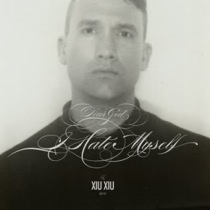
RECORD EXCHANGE STAFF PICK: RYAN ON THE NEW XIU XIU

Xiu Xiu just came through town, and RX staffer Ryan Harper was among the fans who caught the band’s show at Neurolux March 25. Here’s what Ryan has to say about Xiu Xiu’s latest, Dear God, I Hate Myself:

In an often overlooked interview, Jamie Stewart settles the longstanding indie-rock-nerd debate on the pronunciation of his band’s name (it’s Shoo-Shoo), but then goes on to recount a favorite moment in Xiu Xiu’s evolution. Relaxing between gigs in an out of the way cafe, Stewart and his bandmates overheard the groans of a fellow customer into his phone: “Aww, man, I can’t. I have to take my stupid sister and her stupid friends to see some stupid emo band called Schwee-Schway.”

Of course, Stewart says, he introduced his band as “Schwee-Schway” that night and as “Jzoo-Jzoo” or “Kcsoo-Kcsoo” on as many other nights since, happily wallowing in that ambiguity, in the secret, acrid humor of the inside joke that is or isn’t the band’s name. “Who cares?” he seems to be saying, like the smirking, overly self-aware nihilist in the corner.

This, then, is Xiu Xiu through the lens of its only constant member, Stewart: tortured tales of disillusionment and dismemberment and all the tongue-in-cheekiness that comes with the territory.

And this, also, is Dear God, I Hate Myself, a return to the eclectic, openly-electronic art-pop of his third album, Fabulous Muscles (2004). This is another album that revels in absurdity, misery, and mixed-up, awkwardly muttered love, all while barely keeping a straight face. It’s another carefully constructed vision of life filled with characters as harrowing and hilarious as the cross-dressing, gun-toting “Sad Pony Guerrilla Girl” from A Promise (2003), characters as imaginary and real and myriad as all the beloved perversions of the band’s name.

It isn’t that Stewart’s hushed confessional vocals aren’t serious. Delivered over a wash of glitchy, minimal darkwave, owing equal debts to Deerhoof and early post-punk pop, to New York No-Wave and Cal-Berkeley-back-alley gender politics, Stewart’s narratives of over-the-top self-hatred and under-the-table strokes of faith are entirely earnest, and, really, that’s the joke: that these desperate, pathetic characters might not be the same people singing to you from the stage, from the studio, but they’re completely real. They’re the people you meet right before last call, the people who buy insurance from you, the people who sell you refrigerators. They’re us.

Love it or leave it. And, like Stewart, I can’t help but love it — from both sides of the stage.