AT ALIVE AFTER FIVE: BLACK KEYS' BLUES-ROCK HOMIE PATRICK SWEANY

sweany39This week’s Alive After Five headliner: Patrick Sweany
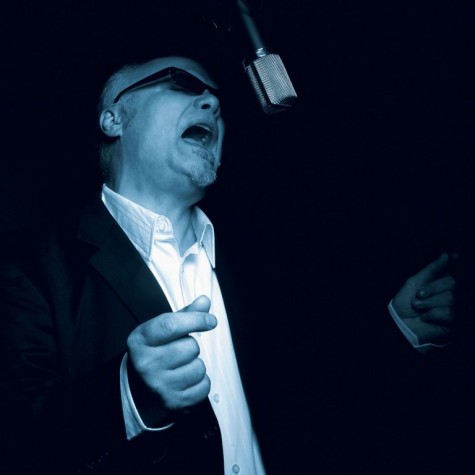
Go Listen Boise local opener: Ned Evett

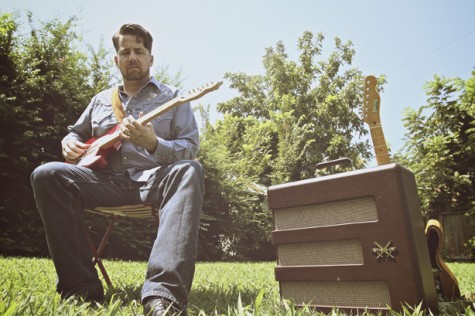
ABOUT PATRICK SWEANY

Patrick Sweany likes the spaces in between.

On a given night (or on a given album) he’ll swing through blues, folk, soul, bluegrass, maybe some classic 50s rock, or a punk speedball. He’s a musical omnivore, devouring every popular music sound of the last 70 years, and mixing ’em all together seamlessly into his own stew. Yet, the one thing that most people notice about Patrick isn’t his ability to copy – it’s his authenticity. Like his heroes, artists like Bobby “Blue” Bland, Doug Sahm, Joe Tex, Patrick somehow manages to blend all of these influences into something all his own.

It’s no wonder that as a kid he immersed himself in his dad’s extensive record collection: 60s folk, vintage country, soul, and, of course, blues. Patrick spent hours teaching himself to fingerpick along to Leadbelly, Lightnin’ Hopkins, and other folk-blues giants.

In his late teens, Patrick began playing the clubs and coffeehouses around Kent, Ohio. He quickly gained a reputation for the intricate country blues style he was developing: part Piedmont picking, part Delta slide – with an equally impressive deep, smooth vocal style.

But Patrick wouldn’t stay in the acoustic world for long. His love of 50s era soul and rock fused with the adrenaline-soaked garage punk revival happening throughout the Rust Belt pushed Pat to form a band.

After 4 critically acclaimed CDs (two produced by longtime collaborator and Grammy award winner Dan Auerbach of The Black Keys), Patrick has expanded his touring radius to 49 states and the UK. He’s played premiere festivals all over the U.S., and supported national acts such as The Black Keys, The Gourds, The Wood Brothers, Wayne Hancock, Hot Tuna, and Paul Thorn on tour.

His latest record, Close To The Floor, hit the streets July 16, 2013. It was recorded to 2-inch tape in Nashville and features contributions from Joe McMahan (Luella & The Sun, Allsion Moorer, Webb Wilder), Ron Eoff (Cate Brothers, Levon Helm), Jon Radford (Justin Townes Earle, Lilly Hiatt), and Ryan Norris (Lambchop), among others. Close To The Floor is a gritty, hard look at some very difficult recent events in Sweany’s life and recalls the halcyon days of Muscle Shoals releases by Dan Penn, Eddie Hinton and Leon Russell.

THEY MIGHT BE GIANTS IN-STORE AND MEET & GREET SUNDAY, JUNE 9 (3PM)

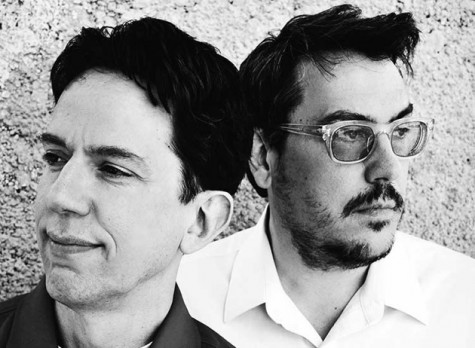
tmbgportraitbwThey Might Be Giants will perform live at The Record Exchange (1105 W. Idaho St., Downtown Boise) at 3 p.m. Sunday, June 9. A meet and greet with the band will follow the performance. This free, all-ages Record Exchange in-store is sponsored in part by Boise Weekly. They Might Be Giants are performing at the Egyptian Theatre that evening and we have tickets for sale here at the store!

ABOUT THEY MIGHT BE GIANTS

They-Might-Be-Giants-Nanobots-608x608There aren’t a lot of bands who can open an album with the line “Hi, your head is on fire” and have it sound not only cool, but for the said lyric to be one of the album’s less ostentatious declarations. With NanobotsThey Might Be Giants’ 16th studio album—the band offers up a musical landscape of black ops, microscopic robots, insect hospitals, and karate chops—as well as a sprinkling of mini-ruminations clocking in at well under the one-minute mark. For a group that has made a career out of crafting unforgettable melodies while deftly illuminating the odd, Nanobots is a remarkable achievement—25 tracks that zig and zag in a myriad of new directions, including the very adult topics of melancholy and alienation, while showcasing the band’s expert musicianship and undeniable skill at crafting perfect pop productions.

Formed in 1982, They Might Be Giants are themselves giants of a sort in the pantheon of alternative-indie-college rock (or whatever you wanna call it). Emerging out of NYC’s East Village performance scene with a singular take on art-pop, the dynamic duo of John Flansburgh and John Linnell would break big at the dawn of the 1990s with their platinum LP Flood, one of the most beloved “alternative rock” albums of all time. In the following years, the band would go on to dip their creative toes in a variety of different pools—not only releasing a slew of excellent albums, but also making music for television and films, snagging a couple of Grammy awards, and serving as the subject for an acclaimed documentary about their career (Gigantic: A Tale of Two Johns). Over the course of three decades they’ve also managed to engender a coterie of intensely devoted (some might even say obsessive) fans who are prone to following the band around Grateful Dead style whenever They Might Be Giants hits the road. It’s certainly a great track record for any band…particularly for one more well-known for accordion heroics than guitars and whose most classic songs involve birdhouses and ancient cities.

So, when you are already 15 albums deep into a career that spans over thirty years, what do you do next? If you are They Might Be Giants, you simply do what you’ve always done—you gather your friends in NYC (in this case producer Pat Dillett and regular TMBG cohorts Stan Harrison, Jon Graboff, Jedediah Parish, and Chris Thompson) and follow your creative impulses wherever they happen to lead you. In the case of Nanobots, the resulting album is a collection of skewed narratives that present a kind of through-line to the band’s earliest work—herky jerky pop songs sprinkled among a variety of truncated mini songs, all of them begging to be sung along to.

“There is a thread that runs along everything we’ve ever done,” says John Linnell. “We’re always trying to do new things—new styles, experimenting with things that are pretty/ugly or kind of atrocious sounding or purely weird—but we also love pop songs. Despite how we may try to change things up, I think we’re still trying to meet the same kinds of criteria ultimately. We are still, in the end, trying to make songs that we want to hear.”

“When you enter a studio to make your 16th record, you might assume the stakes couldn’t be any lower,” jokes John Flansburgh, “But we really approached this project with a level of intensity and focus that rivals anything else we’ve ever done. I think the sonics and musicality of what we’ve been doing for the past couple of years are actually quite evolved from where we started, but at the same time we really pared things back. We tried to come at this record with a lot of restraint, to see how minimal we could be with the song arrangements. That was really our challenge this time around. Some of the songs are crazy sparse. It’s kind of amazing to me that it took us sixteen albums to get around to trying some of these ideas. It’s also reassuring to know that you can make music for this long and still uncover these new ideas. There are definitely points in Nanobots that feel like a new direction for us.”

So, what then is a Nanobot? According to reliable Internet sources, a nanobot is “a hypothetical, very small, self-propelled machine, esp. one that has some degree of autonomy and can reproduce.” Given the microscopic nature of songs like “Tick” “Hive Mind” and “Didn’t Kill me”, it’s easy to see how the idea of the tiny creation with the capacity to accomplish big things might serve as a guiding principle for the entire record, so much of which is built upon a kind of purposeful brevity. That being said, the album still boasts a variety of three-minute pop gems—“Call You Mom,” “Nanobots,” “Lost My Mind”—that rank among TMBG’s most instantly catchy tunes.

“I like the idea of short songs,” says Linnell, “It’s just gonna dilute the power of the idea if we make it longer. There’s no need to force another verse and chorus if the song doesn’t need one. There isn’t necessarily a logical explanation to why Nanobots seemed like such an important title for the entire record, but I like the idea of these tiny things that are designed to do a very specific thing—they can replicate themselves in whatever way they might need to in order to do the required job. And I like the idea are self-replicating. Humans do that by having children. It’s not necessarily a logical process, it’s just something that happens. You unleash this force—a child or a microscopic robot—and then it goes out into the world and does its thing…in a way you can’t always control.”

“We came of age in the time of albums”, says Flansburgh, “So we were raised on the notion that songs—when collected together—serve to amplify and support each other when part of a well-considered collection. That’s the power of the album. With Nanobots we weren’t making a concept album, but it does have a certain power as a kind of song cycle. These short little tiny songs have a purpose and they make sense when surrounded by the longer songs. There’s a certain mania to this record, a certain energy you get when you include all these hard working miniatures.”

There are few bands currently operation that can boast a thirty year career, let alone boast a career that includes 16 studio albums—including four beloved albums for children—and a history of embracing emerging technologies (the band’s brilliantly curated iPhone app recalls their early “Dial-A-Song” days), but the genius of They Might Be Giants—and perhaps the secret to their success—is that they continue to operate within their own world. Three decades in, there is still no other band that sounds like them and—even more importantly—very few artists that approach songwriting with the kind of wide-eyed, natural curiosity as They Might Be Giants. Whether they are singing about tiny robots, broken hearts, combustible heads, or ticks, they do it in a vernacular that is uniquely their own.

AT ALIVE AFTER FIVE: SEASON OPENS WEDNESDAY WITH CURTIS SALGADO!

curtis salgadoThis week’s Alive After Five headliner: Curtis Salgado
Go Listen Boise local opener: James Coberly Smith with LeAnne Town

ABOUT CARLOS SALGADO

Award-winning vocalist/songwriter/harmonica icon Curtis Salgado sings and plays with soulful authority, never giving less than 100 percent. He plays each and every show like it’s the most important gig of his career. He recalls the time when his friend, the great chitlin’ circuit singer Buddy Ace, put on the show of his life, singing his heart out, making three costume changes, all while playing at a casual house party. Salgado was floored. “I was just there playing with my band, hanging out in cut-offs and a t-shirt, and there’s Buddy treating the gig the same as if he was performing at the Apollo,” he says. From that moment on, Curtis vowed that every time he got on stage he would deliver his very best shot.

Salgado’s been perfecting his craft since he first began playing professionally in the late 1960s. He fronted his own group, The Nighthawks, inspired John Belushi to create The Blues Brothers, was co-star of The Robert Cray Band and sang and toured with Roomful Of Blues. He released his first of eight solo albums in 1991, hitting the road hard year after year. Salgado and his band toured with The Steve Miller Band and Curtis spent a summer singing with Santana before being sidelined by serious health issues in 2006. He’s battled all the way back, and, after a full and complete recovery, has been tearing up concert stages all over the country.

Winner of the 2010 Blues Music Award for Soul Blues Artist Of The Year, Salgado effortlessly mixes blues, funk and R&B with a delivery that is raw and heartfelt. He moves with ease from the tenderest ballads to the most full-throated stompers. Blues Revue says, “Salgado is one of the most down-to-earth, soulful, honest singers ever, and his harmonica work is smoking and thoroughly invigorating…rollicking, funky and electrifying.” With his Alligator Records debut, Soul Shot, Salgado is set to reach the largest audience of his career.

Soul Shot was produced by funk and R&B guitarist Marlon McClain, drummer Tony Braunagel and co-produced by Salgado. “I wanted to make a soul record that you can listen to and dance to,” says Salgado. And that’s just what he and members of The Phantom Blues Band, along with additional guest musicians, did. Soul Shot speaks loud and clear to contemporary audiences, carrying on the timeless spirit of 1960s and ‘70s R&B. The album features four Salgado originals and seven carefully chosen covers. “I don’t care who writes the songs,” Salgado says, “as long as I can make them my own.” Songs by Johnny “Guitar” Watson, George Clinton, Otis Redding and Bobby Womack flow into and out of Salgado’s own compositions. Each track—the slow-burning ballads and the driving rockers—is delivered with the vocal power and passion of a musical master. “Soul Shot was the most challenging recording of my career,” he says, “and it’s the solid best thing I’ve ever done. That’s a fact.”

Born February 4, 1954 in Everett, Washington, Salgado grew up in Eugene, Oregon. His parents were “hip,” according to Salgado, and his house was always filled with music. His parents’ collection included everything from Count Basie to Fats Waller, and his older brother and sister turned him on to the soul and blues of Wilson Pickett and Muddy Waters. His father liked to sing, and would point out specific passages in a Count Basie or Ray Charles recording for Curtis to pay close attention to, and the youngster soaked it all up. He attended a Count Basie performance when he was 13 and decided then and there that music was his calling. Curtis began devouring the blues of Little Walter and Paul Butterfield, fell in love with the harmonica and taught himself to play.

As a hungry-to-learn teenager, his musical abilities grew by leaps and bounds. He played his first professional gigs when he was 16, and by 18 he was already making a name for himself in Eugene’s bar scene. Salgado quickly developed into a player and singer of remarkable depth, with vocal and musical influences including Otis Redding to O.V. Wright, Johnnie Taylor, Muddy Waters, Little Walter, Sonny Boy Williamson I and II, Lightnin’ Hopkins, Howlin’ Wolf, Otis Spann and Magic Sam. With his band The Nighthawks, he became a must-see act in Eugene and throughout the Northwest. Salgado earned a reputation for high-intensity performances and a repertoire that was informed by his encyclopedic knowledge of blues, soul and R&B music.

In 1973, Salgado met Robert Cray and the two became fast friends. They jammed often, sometimes sitting in with each other’s bands, often playing double bills. In 1975, Salgado had the idea to start a blues festival in Eugene in order to meet and play with as many established blues stars as possible. The festival became an annual event, allowing Curtis to back up, befriend and occasionally house legends including Floyd Dixon, Frankie Lee, Luther Tucker, Otis Rush, Clifton Chenier, Sonny Rhodes and Albert Collins. In fact, it was Salgado—whose Nighthawks backed Collins locally—who crowned the blues legend with the title he would carry for the rest of his career: “The Master Of The Telecaster.”

In 1977, comedian/actor John Belushi was in Eugene filming Animal House. During downtime from filming, Belushi caught a typically balls-out Salgado performance. Afterwards the two got to talking and a friendship grew. Before long Salgado began playing old records for Belushi, teaching him about blues and R&B. Belushi soaked up the music like a sponge and soon developed his idea for The Blues Brothers, first as a skit on Saturday Night Live and then as a major motion picture and a best-selling record album and concert tour. The album, Briefcase Full Of Blues, is dedicated to Curtis Salgado, and, as a nod to Salgado, Cab Calloway’s character in the film is named Curtis. The Blues Brothers’ set list was strikingly similar to the shows Salgado was delivering on a nightly basis.

As Salgado was getting more serious about his career, he realized some of his band mates were not. It was then that Salgado joined forces with Cray and formed a new, more forceful Robert Cray Band. As the stature of the group grew, Salgado found himself sharing stages with blues icons like Muddy Waters, Bobby Bland and Bonnie Raitt. The band performed a transcendent set at The 1977 San Francisco Blues Festival to thunderous ovation before backing up the great Albert Collins.

After Salgado and Cray parted ways in 1982, Curtis went on to front Roomful Of Blues, singing and touring with them from 1984 through 1986. Back home in Oregon, he formed a new band, Curtis Salgado & The Stilettos, and was once again tearing it up on the club scene. He wrote many new songs, and honed his band to a razor’s edge before releasing his first solo album in 1991 on the fledgling JRS label. The group toured the country and began developing a strong following. His friend and fan Steve Miller invited Curtis and his band to open for him on a summer shed tour in 1992. Two years later, Salgado spent the summer on the road singing with Santana. In 1997 he toured with Miller again and performed in front of an audience of millions on NBC television’s Late Night With Conan O’Brien. Salgado then joined forces with Shanachie Records in 1999, putting out four critically acclaimed albums over the next nine years and finding his biggest audience yet.

In 2006 Salgado was sidelined when he underwent a successful liver transplant and then shortly afterwards was diagnosed with and then beat lung cancer. Like so many musicians, Curtis had no health insurance. His medical expenses were paid for in part by a huge outpouring of love and money from his fellow musicians and his huge Northwest fan base. He bounced back with a perfect bill of health in 2008, releasing Clean Getaway. Billboard said the album was a “tour-de-force, showcasing Salgado’s range and power as a vocalist” and that it featured “hard-nosed blues, beautifully nuanced phat and funky R&B.” Blues Revue called it “one of the best records of the year.”

Curtis tours heavily, leaving fans excited and hungry for more everywhere he plays. He has performed at festivals all over the world, including The San Francisco Blues Festival, The Chicago Blues Festival, Memphis’ Beale Street Music Festival, The Tampa Bay Blues Festival, Denver’s Mile High Blues Festival, Toronto’s Waterfront Blues Festival, Thailand’s Phuket International Blues Festival and Poland’s Blues Alive Festival.

Now, with Soul Shot, Salgado is ready for more, tougher and more focused than ever. He will again hit the road hard, proving his reputation as a fire-breathing live performer night after night. And that’s just how he likes it. “Always give it your best,” he says. “Be honest and be real. Treat every show like it’s the biggest night of your life.” With Soul Shot and a long list of tour dates already planned, the biggest performances of Curtis Salgado’s life are surely yet to come.

THE RECORD EXCHANGE PRESENTS AN EVENING WITH YO LA TENGO MAY 14 AT THE KNITTING FACTORY – WIN TICKETS!

yo la tengoThe Record Exchange presents An Evening with Yo La Tengo Tuesday, May 14 at the Knitting Factory (doors 7:30/show 8:30). Tickets are available now at The Record Exchange, (866) 468-7624, ticketweb.com and knittingfactory.com. WIN A PAIR OF TICKETS HERE.

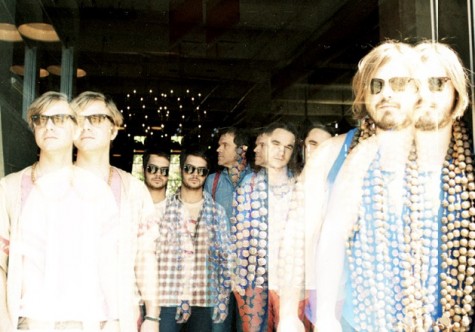
Yo La Tengo are in many respects the quintessential critics’ band: in addition to their adventurous eclecticism, defiant independence, and restless creative ambition — three qualities that virtually guarantee music press acclaim — the group’s frontman, Ira Kaplan, even tenured as a rock scribe prior to finding success as a performer. So frequently compared to the Velvet Underground that they even portrayed the legendary group in the 1996 film I Shot Andy Warhol, the Hoboken, New Jersey-based Yo La Tengo have explored the extremes of feedback-driven noise rock and sweetly melodic pop, shading their work with equal parts scholarly composure and fannish enthusiasm. Prolific and mercurial, they have ultimately transcended their myriad influences to ensconce themselves as a beloved institution of the indie community.

The core of Yo La Tengo (Spanish for the outfielder’s cry of “I’ve got it!”) is comprised of singer/guitarist Kaplan and his wife, drummer/vocalist Georgia Hubley. After forming the band in 1984, they placed an advertisement seeking other musicians to round out the lineup, requesting applicants who shared their fondness for the Soft Boys, Mission of Burma, and Arthur Lee’s Love. A number of bassists and lead guitarists passed through the band’s roster during its formative years, but after bowing in late 1985 with the single “The River of Water,” backed by a cover of Love’s “A House Is Not a Motel,” Yo La Tengo’s membership appeared to stabilize with the additions of guitarist Dave Schramm and bassist Mike Lewis prior to the sessions for 1986’s full-length roots pop debut, Ride the Tiger, produced by former Mission of Burma bassist Clint Conley.

However, both Schramm and Lewis exited in the wake of the record’s release, leaving Kaplan to assume lead guitar duties. Bassist Stephan Wichnewski signed on for 1987’s New Wave Hot Dogs, a more assured outing that brought the group’s Velvet Underground obsession to the fore via a cover of the early VU composition “It’s Alright (The Way That You Live).” Not only did Kaplan’s introverted, half-spoken vocals and buzzing guitar work closely recall Lou Reed, but Hubley’s rock-steady drumming and breathy backing turns simultaneously conjured memories of vintage Maureen Tucker. Even better was 1989’s President Yo La Tengo, recorded with producer and guest bassist Gene Holder; opening with the droning squalls of the stunning “Barnaby, Hardly Working,” the record spotlighted the group’s sonic schizophrenia by including two Jekyll-and-Hyde versions of the track “The Evil That Men Do” — one a gorgeous instrumental, the other a blistering feedback freakout.

Schramm returned to the fold for 1990’s Fakebook, a remarkable acoustic folk-pop journey through Kaplan’s record collection and a virtual family tree of Yo La Tengo reference points. A wonderfully low-key collection of covers ranging from forgotten nuggets (the Kinks’ “Oklahoma U.S.A.,” the Flamin’ Groovies’ “You Tore Me Down,” Gene Clark’s “Tried So Hard”) to absolute obscurities (Rex Garvin & the Mighty Cravers’ “Emulsified,” the Escorts’ “The One to Cry,” the Scene Is Now’s “Yellow Sarong”), Fakebook also included a handful of outstanding new originals as well as luminous retakes of the previous record’s “Barnaby, Hardly Working” and New Wave Hot Dogs’ “Did I Tell You?” The superb That Is Yo La Tengo EP previewed 1992’s May I Sing With Me, the first effort to feature permanent bassist James McNew (formerly of Christmas). A return to noise typified by the hot-wired nine-minute feedback saga “Mushroom Cloud of Hiss,” the record balanced out its extremist tendencies with the occasional sidestep into melodic beauty (“Detouring America with Horns”) and infectious indie pop (“Upside-Down”).

A move to the Matador label predated the release of 1993’s Painful, another winner informed by the atmospherics of shoegazer drones and dream pop. Bookended by radically opposed renditions of the track “Big Day Coming” — the first an organ-driven mood piece, the other an edgy guitar outing — the record pushed Yo La Tengo in a multitude of new directions, significantly expanding the trio’s palette of sounds and textures. Released in 1995, Electr-O-Pura continued the progression, zigzagging from dead-on British Invasion re-creations (the sparkling “Tom Courtenay”) to shimmering folk (the Hubley-sung “Pablo and Andrea”) to bracing sonic experimentation (“Decora”). After 1996’s Genius + Love Equals Yo La Tengo, a two-disc compendium of B-sides, compilation tracks, rare singles, and unreleased material, the trio resurfaced in the spring of 1997 with I Can Hear the Heart Beating as One; And Then Nothing Turned Itself Inside Out followed in early 2000.

The group also performed a three-night stint as the backing band for Ray Davies on his 2000 U.S. tour, and in 2002 released The Sounds of the Sounds of Science, a soundtrack to the undersea documentaries of French filmmaker Jean Painleve. That fall, they released the Nuclear War single, which featured several versions of Sun Ra’s epic, and that winter performed their second annual Hanukkahpalooza, an eight-night musical festival at Hoboken, New Jersey’s Maxwell’s, which also led to a special limited-edition EP of Christmas songs. Yo La Tengo released Summer Sun in spring 2003, and that year Georgia Hubley performed in Mirror Man, an avant-garde rock opera by Pere Ubu’s David Thomas.

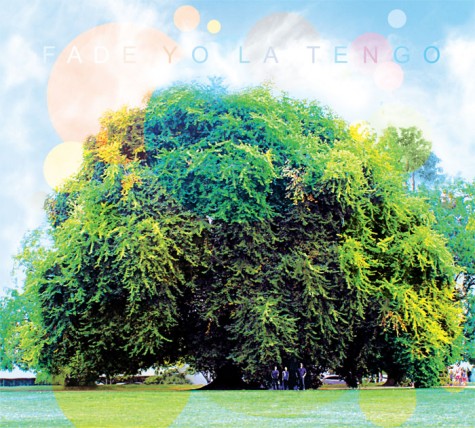
In 2005, Matador Records paid homage to Yo La Tengo’s 20th year as recording artists with the career-spanning compilations Prisoners of Love: A Smattering of Scintillating Senescent Songs: 1985-2003 and A Smattering of Outtakes and Rarities 1986-2002. The band returned the following year with the strong all-new album I Am Not Afraid of You and I Will Beat Your Ass. Fuckbook, a covers album that the band released under the alias Condo Fucks, arrived in 2009, followed several months later by the full-length Popular Songs. The following year, the Here to Fall EP, which featured remixes by De La Soul, Rjd2, and Pete Rock, arrived. The group’s 13th album, Fade, was released in 2013. This album marked a departure for the band, as it was the first record since their 1993 breakthrough, Painful, not recorded with producer Roger Moutenot, but instead tracked with Chicago scene veteran and Tortoise member John McEntire.

PONDEROSA IN-STORE WEDNESDAY, APRIL 10 — ONLY SHOW IN TOWN!

ponderosa photoPonderosa will perform live at The Record Exchange (1105 W. Idaho St., Downtown Boise) at 6 p.m. Wednesday, April 10 — this is the band’s ONLY SHOW IN TOWN! This free, all-ages Record Exchange in-store is sponsored in part by Boise Weekly. RSVP HERE.

ABOUT PONDEROSA

ponderosa-widget-thumbIn the low light of the hut the old man sat quietly puffing on his mapacho. “You must disengage from your…continuity,” he said, referring I’m sure to my earbuds, which, with apologies, I cranked. As I tapped the last drop out of the clay cup and laid back on the ragged foam mat I saw that the old man’s face was no longer his, but a hawk’s. The spirit-world comes on like that.

The music I came to see with my third eye, Ponderosa’s Pool Party, started with a voice, a silver highlonesome in a mist (or maybe the mist was the voice), an electric guitar that identified itself (verbally, and I’m translating here) as He-who-makes-things-sprout, then a convergence at something analogous to a rain dance, as if conducted (in lapis lazuli) by Keith Moon. Pianos and guitars and harmonies breathed into existence tetrahedrons, Spanish friars, bird-lions, machine elves, Quetzacotl, so forth, and landscapes, always the sweeping, rolling variety. No point going on about what the music looks like. To paraphrase the giant, blazing eye that cries honey, you must see for yourself.

Hearing Ponderosa’s previous album for the first time was a no less illuminating experience if a very different one, involving a trampoline, two bottles of rye, and a sack of possum. Another facet of Ponderosa, another method to ascertain its nature. That album, Moonlight Revival, belongs in the Southern rock canon as much as anything by the Crowes or Little Feat, but more crucial is that with it Ponderosa delivered the first successful fusion of straight Southern rock and Revolver-era Beatles, utterly seamless and genetically sound, not a Frankenstein. This is the musical equivalent of mapping the genome, drunk, using only a monocle. Impossible, yet Ponderosa demonstrated that “a thing that cannot be done can be accomplished by not-doing it.” And because that sounded more conclusively relevant when it was told to me by a stag with no mouth, let’s add that Ponderosa’s clear m.o. is following its bliss.