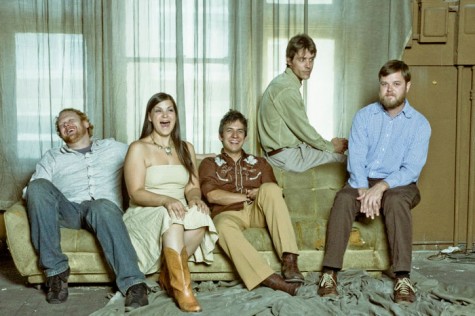
ALIVE AFTER FIVE: ACOUSTIC DELTA BLUES WITH THE FIERY RORY BLOCK

This week’s Alive After Five headliner: Rory Block
Go Listen Boise local opener: Sun Blood Stories

ABOUT RORY BLOCK

Heralded as “a living landmark” (Berkeley Express), “a national treasure” (Guitar Extra) and “one of the greatest living acoustic blues artists” (Blues Revue), Rory Block has committed her life and her career to preserving the Delta blues tradition and bringing it to life for 21st century audiences around the world.

A traditionalist and an innovator at the same time, she wields a fiery and haunting guitar and vocal style that redefines the boundaries of acoustic blues and folk. The New York Times declared: “Her playing is perfect, her singing otherworldly as she wrestles with ghosts, shadows and legends.”

Born in Princeton, N.J., Aurora “Rory” Block grew up in a Manhattan family with Bohemian leanings. Her father owned a Greenwich Village sandal shop, where musicians like Bob Dylan, Maria Muldaur and John Sebastian all made occasional appearances. The rich and diverse Village scene was a constant influence on her cultural sensibilities. She was playing guitar by age ten, and by her early teens she was sitting in on the Sunday jam sessions in Washington Square Park.

During these years, her life was touched – and profoundly changed – by personal encounters with some of the earliest and most influential Delta blues masters of the 20th century. She made frequent visits to the Bronx, where she learned her first lessons in blues and gospel music from the Reverend Gary Davis. She swapped stories and guitar licks with seminal bluesman Son House, Robert Johnson’s mentor (“He kept asking, ‘Where did she learn to play like this?’”). She visited Skip James in the hospital after his cancer surgery. She traveled to Washington, D.C., to visit with Mississippi John Hurt and absorb first-hand his technique and his creativity.

By the time she was in high school, her family had splintered in different directions. With nothing holding her down, she left home at 15 with her guitar and a few friends – heading for California on a trip marked by numerous detours and stops in small towns. Along the way, she picked her way through a vast catalog of country blues songs and took her first steps in developing a fingerpicking and slide guitar style that would eventually be her trademark.

She recorded an instructional record called How To Play Blues Guitar in the mid-60s (she was billed as Sunshine Kate on the original recording), but then took a decade off from music to start a family. In the mid- and late ‘70s, she made a few records that ran counter to her inherent blues instincts, and the result was frustration. “Eventually disgusted with trying to accommodate a business which never seemed to accept me or be satisfied with my efforts,” she says, “I gave up totally and went back to the blues.” The result was a record deal with the Boston-based Rounder label, which released her High Heeled Blues in 1981. Rolling Stone referred to the album as “some of the most singular and affecting country blues anyone – man or woman, black or white, old or young – has cut in recent years.”

Back in a groove that felt comfortable and fulfilling, Block threw herself headlong into an ambitious touring schedule that helped hone her technical and vocal skills to a razor’s edge, and at the same time nurture a distinctive voice as a songwriter. She stayed with Rounder for the next two decades, making records that simultaneously indulged her affinity for traditional country blues and served as a platform for her own formidable songwriting talents.

The world finally started taking notice in the early 1990s, and Block scored numerous awards throughout the decade. Her visibility overseas increased dramatically when Best Blues and Originals, fueled by the single “Lovin’ Whiskey,” went gold in parts of Europe. She brought home Blues Music Awards four years in a row – two for Traditional Blues Female Artist of the Year, and two for Best Acoustic Blues Album of the Year. Then in 1997, she won the Blues Music Award for The Lady and Mr. Johnson, a tribute to Robert Johnson, taking home Acoustic Album of the Year.

Today, after more than twenty highly acclaimed releases and five Blues Music Awards, Block is at the absolute height of her creative powers, bringing a world full of life lessons to bear on what she calls “a total celebration of my beloved instrument and best friend, the guitar.” Her newest project, titled “The Mentor Series,” is a growing collection of tribute albums to the blues masters she knew in person, including Blues Walkin’ Like A Man/A Tribute to Son House and Shake Em On Down/A Tribute to Mississippi Fred McDowell. Her latest release is I Belong to the Band: A Tribute to Rev. Gary Davis.
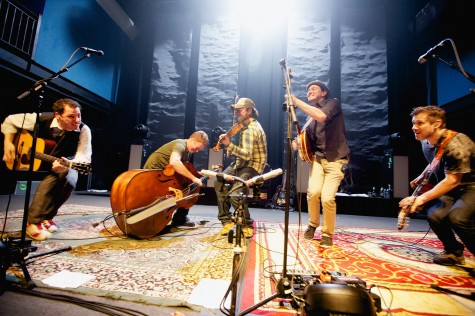
ALIVE AFTER FIVE: GROOVY BLUEGRASS WITH THE INFAMOUS STRINGDUSTERS!

This week’s Alive After Five headliner: The Infamous Stringdusters
Go Listen Boise local opener: Willison Roos

ABOUT THE INFAMOUS STRINGDUSTERS

The Infamous Stringdusters are at the forefront of a new movement in bluegrass music. Their unmatched virtuosity has enabled them to take acoustic music to a completely new level. They wield an expansive repertoire touching on masters from Jimmy Martin to John Hartford, but their strength lies in their original compositions.

Dedication to arrangements sets them apart, and extended improvisation makes every performance completely unique. The live Stringdusters experience is anti-formulaic, groove friendly, and mind‐expanding ‐ not your granddaddy’s bluegrass. Unless your granddaddy was Jerry Garcia.

ALIVE AFTER FIVE: FUNK IT UP WITH BILLY FRANKLIN'S NOLA LIVE!

This week’s Alive After Five headliner: Billy Franklin’s NOLA Live
Go Listen Boise local opener: Nino Lobos

ABOUT BILLY FRANKLIN’S NOLA LIVE

Billy Franklin (leader of New Orleans’ based band E.O.E) has begun to play more and more under his own name over the last few of years. “It is just a way to branch out,” says Franklin, “to take every opportunity that comes my way and explore different styles and play with more people.” Billy Franklin’s NOLA Live is collection of his favorite musicians from New Orleans, and audience members can expect a heavy dose of New Orleans influenced funk, reggae, and world music in addition to some of the material Franklin has become know for with E.O.E. Franklin brings with him a wealth of talent from the Big Easy, including Doug Dietrich on bass (Karl Denson, Big Sam’s Funky Nation), Michael Jenner on saxophone (Johnny Sketch and the Dirty Notes) and Gabriel Velasco on drums and percussion (E.O.E).

Billy Franklin has a long history in New Orleans, including having been schooled at the nationally acclaimed New Orleans Center for the Creative Arts during high school (other graduates include Wynton Marsalis, Harry Connick Jr. and Terrence Blanchard) and then receiving his degree in Jazz Performance from the University of New Orleans under the direction of Ellis Marsalis. In 2010, he was named “Best Emerging Artist” at the Best of New Orleans Awards. He has also won six Best of New Orleans of Awards with his band E.O.E, which he started in 2004. If the name sounds familiar, it is probably because Franklin has toured over 150,000 miles since Hurricane Katrina, both with E.O.E and the Boulder, Colo., based group Holden Young Trio, for which he was a founding member. His prolific guitar work and subtle yet poignant vocals are a must see for anyone interested in seeing New Orleans musicianship and songwriting at its best.

ALIVE AFTER FIVE: THE BLACK LILLIES

This week’s Alive After Five headliner: The Black Lillies
Go Listen Boise local opener: Lee Penn Sky

ABOUT THE BLACK LILLIES

Those familiar with the background of Black Lillies frontman Cruz Contreras are often struck with a single question when the man opens his mouth to sing:

Why?

Why, given the rich baritone that can range from languid to intense, from reverently hushed to brashly bombastic, did it take so long?

Obviously, he’s no stranger to music. He is the man who loaned out his initials to Robinella and the CCstringband, which flirted with national fame a few years ago with a hit (“Man Over”) on Country Music Television and an appearance on “Late Night With Conan O’Brien” in 2003. Maybe it took a while for him to find his voice – not the literal one, the one that makes you think of Randy Travis or Dan Tyminski or even the great Ralph Stanley in his prime. We’re talking about that other voice – the one steeped in regret, seasoned with pain and tempered in the fires of hard times.

You see, Cruz almost gave it all up. After records on Sony and Dualtone, Robinella and the CCstringband split – figuratively and literally. Cruz lost his wife, his home, his way. It’s a funny thing, though, the way music takes hold of a man. He spent the summer of 2008 driving a truck, and by the end of that year had the skeleton of an album ready to go.

Whiskey Angel was born from the ashes of one career, and shortly after its release, the East Tennessee music scene learned quickly that Cruz was as much of a bandleader as his ex-wife was when he stood in her shadow. In fact, Whiskey Angel made you forget there was ever anything for Cruz Contreras before The Black Lillies – the band that he brought together to record an entire album over the course of a weekend in his living room.

The Black Lillies take their name from a song on that first record. After filtering through several lineup changes, Cruz assembled a crackerjack team of pickers, players and singers who have what it takes to put meat on those songs. Tom Pryor made a name for himself playing pedal steel for damn near any band that could talk him into it; drummer Jamie Cook anchored the rhythm section for Americana darlings the everybodyfields; harmony vocalist Trisha Gene Brady can wail like a hellcat or purr like a wildcat, and everybody who’s heard her sing agrees it only makes sense that someone with her pipes can provide the perfect counter-balance to Cruz. Bassist Robert Richards is the latest addition to the band, and under his steely-eyed gaze, no bass, stand-up or electric, stands a chance.

And then there’s the bandleader himself. Standing in front of the pack, he guides his team with the dignified aplomb of those greats of old – Buck Owens with the Buckaroos, or Bob Wills commanding his Texas Playboys. He knows how to work the crowd, at ease behind the mic, in front of a piano or caressing the necks of a mandolin or guitar. In fact, it’s rare for Cruz to be presented with an instrument he doesn’t play, and everything he does finds its way gently worked into The Black Lillies’ aesthetic with all the swirls and flourishes of brush strokes on canvas laid down by a master painter.

With Whiskey Angel, The Black Lillies established themselves, and it didn’t take long for them to make their mark on the national scene. They kicked off their first national tour at the Ryman Auditorium, the hallowed mother church of country music, and have since labored through three cross-country treks, with a fourth planned for the summer of 2011. They’ve performed on National Public Radio’s Mountain Stage and on two episodes of PBS’s Jammin’ at Hippie Jack’s, and they’ve conquered numerous festivals – Pickathon, the Americana Music Association Festival, Four Corners Folk Festival, Bristol Rhythm and Roots, even Bonnaroo. And in June 2011, the show that made country music famous – The Grand Ole Opry – invited the band to make their debut on the historic circle of wood where so many other legends have performed.

Along the way, the scribes who keep tabs on what’s worth listening to in this day and age have taken quite a shine to Whiskey Angel. It topped 2009 best-of lists across the country and won the Independent Music Awards Vox Pop for Best Album, Americana. It isn’t uncommon for listeners to say that the music has taken hold of their soul. It’s earthy and gritty and melancholy in a way old mountain music was a century ago, speaking of pain and love and revenge and revelry with such spirit, such genuine celebration and sorrow, that it seems to be an album carved out of the planks of a backwoods cabin abandoned during the Great Depression more than a thing recorded in a living room studio by one man.

And as good as it is … as great as it is … it’s a drop in the bucket, because 100 Miles of Wreckage is here. The sophomore record takes what Cruz built in Whiskey Angel and fortifies it, a rustic sound without name and place, unbeholden to geographic region or easy classification. It’s an album crafted with precision and care by musicians who are masters of their trade, who believe in The Black Lillies’ vision and who hold fast to the notion that good music – music with heart and purpose and purity of spirit — is still a valued commodity.

100 Miles of Wreckage has so far spent more than five months on the Americana radio Top 40 charts – four of them in the top 20 – once again proving that a band with this much spirit can break through traditional industry boundaries to achieve success independently, without the constraints of a major label. The band continues to tour non-stop, and without a doubt, they’ll soon be appearing in a town near you. That’s a relative term, of course, but trust us on this – they’re worth the drive, however far it is, because you’ll leave feeling like you’ve witnessed an old-fashion Southern tent revival. These songs will haunt your thoughts long after the curtain closes, rattling through your head like a crooked screen door slaps against its frame when a storm is coming.

It’s that music. It’s that heart. It’s that voice. Why did it take so long, you might ask? Who cares? He did find it, and in the end, we’re grateful. And we think you will be too.

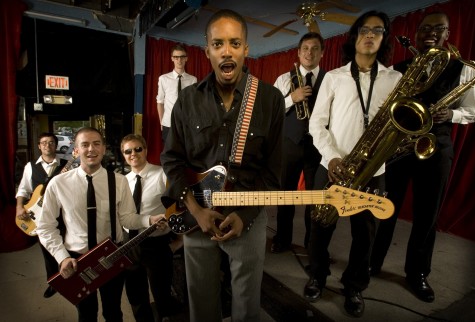
ALIVE AFTER FIVE: GET DOWN WITH BLACK JOE LEWIS & THE HONEYBEARS!

This week’s Alive After Five headliner: Black Joe Lewis and the Honeybears
Go Listen Boise local opener: Bruce Alkire – Frogs of the North

ABOUT BLACK JOE LEWIS AND THE HONEYBEARS

Joe Lewis is stuffed into a van with his six bandmates and one stranger, as they hurtle across Texas to a gig in Marfa. Most of the guys are sleeping now, content in the knowledge they’ve just made the record of their lives. All killer, no filler, the fittingly titled, take
-no-prisoners Scandalous (Lost Highway)—once again produced by Jim Eno, moonlighting from his main gig as Spoon’s drummer—is a churning slab of rock & roll, blues and funk, laced with a double shot of 100-proof punkitude.
This band has gotten tight as a gnat’s ass through nearly two years of barnstorming without a break. “We’ve grown a lot as a band, and so has our fan base,” the lanky, enigmatic Lewis acknowledges. “Hopefully it’s still going up, but it will ultimately be what we make of it. As the shows get bigger and we get bigger, we have to keep improving to meet the demand. If we can’t do that, it won’t go anywhere.” From the look in Joe’s eyes as he glances at the one-stoplight towns and endless open country of central Texas whizzing past, you can tell he knows whereof he speaks.
While on the road, they also eagerly soaked up the worldly knowledge of touring mates the New York Dolls and Cedric Burnside & Lightnin’ Malcolm. “The Dolls covered Bo Diddley and Sonny Boy Williamson, and so do we,” says guitarist Zach Ernst, riding shotgun in the van, as he does in the band. “That youthful, aggressive, unschooled thing is really appealing to us. That’s what we like to listen to and what we’re shooting for. We’ve had some lineup changes since the first record, but at its core, it’s still the same band, and everyone’s excited to move on to the next stage.”
Like his forebears, Lewis writes from direct, often bitter experience with unflinching veracity. The songs of Scandalous are littered with the debris of age-old issues: hard times and one-night stands, lying and cheating, redemption and revenge. Gritty, raunchy and real, his music is not for the squeamish, but experiencing it fully can be genuinely cathartic.
The album opens with the funky fantasia “Livin’ in the Jungle,” as Joe wails with tonsil-shredding abandon over a rhythm section erupting like a tropical storm and horns honking like hyenas in heat. “I’ve always said that if I ever got rich, I would go buy a bunch of land in the Congo or the Amazon, build a nice house and have an Amazon woman to hang out with,” he explains, straight-faced. On the following “I’m Gonna Leave You,” the band sends a jolt of electricity through a Mississippi hill country blues template. “It’s about leavin’ a girl, just gettin’ out while you can, before the shit gets too thick,” he says, punctuating the line with a wicked cackle.
From there, it’s all hands on deck, as one sonic assault after another rips into the eardrums and the pelvis all at once. The instant-classic highway boogie “Mustang Ranch” recounts, in sordid detail, an overnight drive between Salt Lake City and San Francisco, Joe spinning out the narrative as a revved-up talking blues. “It was a long, ridiculous drive, and we got the idea of stopping at the Mustang Ranch,” he recalls. “We were like, ‘Let’s go, man—we got nothin’ better to do.’ So we stopped in there, and it was a really odd experience.” Here, another quick laugh escapes Joe’s lips. “We figured out that we don’t fit brothels that well, and the girls are all fuckin’ busted. But nobody caught anything. Then we left, and we stopped in Reno at six in the morning. It was a freaky experience. We went into a casino and got a cheap breakfast, and all the burnt-out gamblers were walking the town like zombies out there in the early morning. There were even weird lights hovering in the sky. That song’s a true story, pretty much.”
Lewis seems to be channeling Robert Johnson on “Messin’,” which turns on his spooky, low-down vocal and acoustic guitar. “I’m just an old-style blues fan, and I’m tryin’ to do that kind of thing with it,” he says, reeling off the names of his favorite practitioners: Lightnin’ Hopkins, Junior Kimbrough, Elmore James, Howlin’ Wolf and Magic Sam.
The album’s biggest surprise is “You Been Lyin’,” a torrid, politically-themed workout in the tradition of Parliament-Funkadelic and late-’60s Temptations. Featured on this track are the group vocals of the Relatives, a Dallas gospel funk band that made some criminally under-exposed records three decades ago. “They’re like the greatest band ever,” says Joe, “and I’m glad we got them on there, ’cause they made the track really sweet.” Here and elsewhere, you can also pick up the influence of the Stooges, another of Lewis’ touchstones, in the confrontational physicality of the performances. “People call us a soul band, but we’re more of a rock & roll band,” he points out.
“We feel like what we’re doing is different from the soul bands with horn sections that are out there right now,” Ernst adds. “We always joke that we would do that kind of music, but we’re not good enough: our guitars are too loud, we’re too primitive on our instruments, and Joe is more of a shouter and a talking-blues guy than a smooth soul singer. So we’re carving out our own thing because it’s the only way that we can do it. We can’t play it any cleaner or smoother—and we don’t want to, either.”
Growing up in Austin and Round Rock, Joe took it all in—Delta and Chicago blues, Memphis soul, Detroit garage punk—and what came out the other end was, and is, unlike anything else out there. “I don’t know, man—I just kinda dove into it,” Lewis continues. “These neighbors of mine were in this country band and they got to go on tour all the time, and I had to go to work in this stupid factory. I was like, ‘Man, I gotta get in on that.’ So I pulled a guitar down off the wall of a pawn shop where I was workin’ at the time and learned stuff as I went along. The people I was playing with wanted to practice all the time, and I was like, ‘No, man, let’s get out there—I wanna try to do this shit.’ I pretty much learned on stage.”
After years of struggle to get heard, things started moving fast for Lewis after he and Ernst put together the earliest incarnation of Black Joe Lewis & the Honeybears, naming themselves after a crusted container of honey they found on the floor of their “disgusting” rehearsal room. They went out with Spoon after Britt Daniel caught a set, and their subsequent, Eno-produced EP caught the ear of Lost Highway’s Kim Buie, who signed them to a record deal. Eno then helmed their 2009 debut album for the label, Tell ’Em What Your Name Is!, much of it cut live off the floor. “The album manages to maximize every incendiary second of sonic sexuality the band is putting out,” raved PopMatters’ Christel Loar. “Make no mistake, Lewis knows his history, but he also knows his moment, too, and it’s now. The Honeybears aren’t afraid to mine the past to make music for the future.”
That spot-on assessment goes double now. “We pride ourselves on keepin’ our own style and staying true to the guys we look up to,” says Lewis. “We play the music that we like listening to. It’s always about the music first.”
As night falls, the van pulls into Marfa, the musicians rub the sleep from their eyes and stretch their muscles, which will soon be put to use unloading their gear. This is what they live for—another night blowin’ the roof off a shithole in front of a houseful of boozed-up locals looking for a thrill. For the paying customers, it’s a few hours of sweet relief. For Joe Lewis & the Honeybears, it’s another long day and hot night in the life of a working band—seven hungry guys with their eyes on the far horizon.