AT ALIVE AFTER FIVE: TONY FURTADO

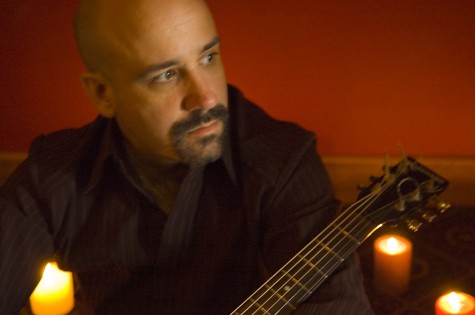
TonyFurtadThis week’s Alive After Five headliner: Tony Furtado
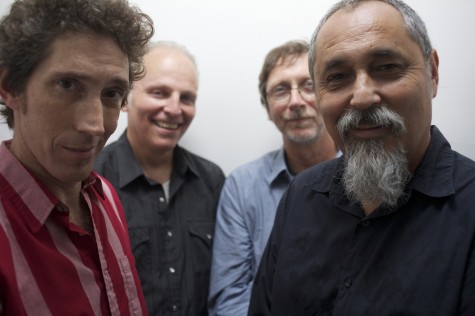
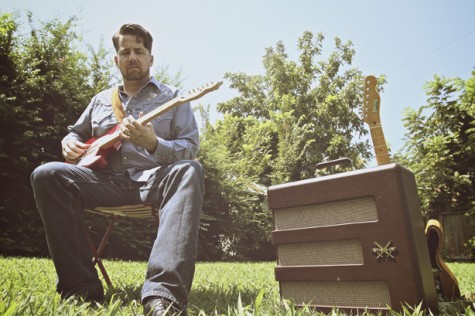
Go Listen Boise local opener: The High Tone Music Show featuring Sean Rogers, Gary Eller and friends

ABOUT TONY FURTADO

Tony Furtado is an indie record label’s dream artist. He has lived primarily on the road for the last two decades. He is gregarious, engaging and entertaining, on and off stage. He’s been called a genius on banjo and slide guitar and his own creative interpretation-hybrid of Americana and indie rock is captivating. Onstage, whether playing with a band or solo, he owns the room, mixing stories of his travels with musicianship that is off the charts.

About Live From Mississippi Studios: On Nov 25, 2011, Tony and his band—some of Portland’s finest young musicians—played 2 exciting sets to a packed house at one of Portland’s guiding light venues for indie rock, Americana, and folk music, Mississippi Studios. The show was recorded and mixed by Rob Stroup (8-Ball Studios) and filmed by a new collective of young filmmakers called Devious Goldfish. The whole project was funded by an interactive Kickstarter campaign where Tony offered up concerts, CDs and even some of his sculpturework as incentives for pledges. Feeding off the thread of energy from the crowd, the performance was riveting and sincere, and the filmmakers captured that on-stage intimacy and raw emotion rarely accessible to the audience. The result is a stunning CD/DVD set, a follow-up to Tony’s 2011 release, Golden (which remained on the Americana top 40 chart for months).

“I think some of my best recordings have actually been captured by bootleggers recording my band live, because in that moment, I’m just not thinking about it. All my energy is focused on the love of playing music and rolling with the moment. It’s a give and take from the audience to the stage, and back. And the music that is created is something that otherwise might not occur without that flow.” — Tony Furtado

AT ALIVE AFTER FIVE: SALLIE FORD & THE SOUND OUTSIDE + FINN RIGGINS!

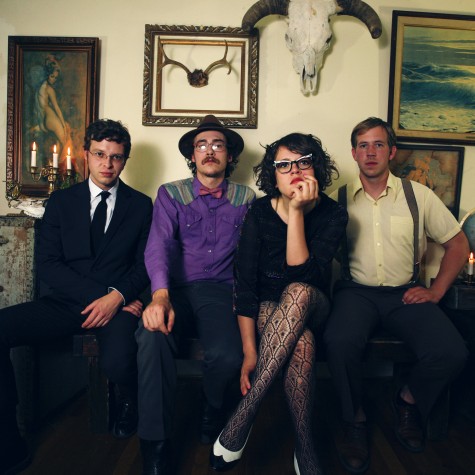
sallie fordThis week’s Alive After Five headliner: Sallie Ford and the Sound Outside
Go Listen Boise local opener: Finn Riggins

ABOUT SALLIE FORD AND THE SOUND OUTSIDE

Sallie Ford & The Sound Outside’s new record Untamed Beast is a visceral rock and roll romp. Like a cross between “Ella Fitzgerald and Tom Waits” (Mashable) Sallie has established herself as one of the most powerful female voices in indie rock. Ford and her group – Tyler Tornfelt (upright bass), Ford Tennis (drums), and Jeffrey Munger (lead guitar) – recorded the album’s 11 tracks with Adam Landry and Justin Collins (Deer Tick, Middle Brother) at Jackpot! Studios in the band’s hometown of Portland, Oregon.

On the new album the band creates a powerful statement on finding freedom through defying conformity. Through clever (often racy) turns of phrase, Sallie twists traditional notions of gender and genre. She says “it’s time for a girl to infiltrate the boys world of rock n roll and grab it by the balls. To me rock n roll isn’t a genre, it’s an energy.” From the exuberantly sexy “Do Me Right” to the free-spirited cry of “Party Kids,” Untamed Beast has a lust for life.

Untamed Beast is the follow up to 2011′s Dirty Radio, which Brooklyn Vegan called “phenomenal [and] monumental.” In 2011, Sallie Ford & The Sound Outside made their national television debut on Letterman, were one of the most talked about new performers at Bonnaroo, the Newport Folk Fest and Bumbershoot, and were championed by Jack White and The Avett Brothers.

AT ALIVE AFTER FIVE: THE IGUANAS – MOVED INDOORS TO LIQUID TONIGHT!

iguanasNOTE: Alive After Five has been moved indoors to Liquid on account of the weather.

This week’s Alive After Five headliner: The Iguanas
Go Listen Boise local opener: Steve Fulton

ABOUT THE IGUANAS

The word “Americana” gets tossed around rather loosely these days; it can mean anything from a hipster with a recently-discovered acoustic guitar to a decades-long denizen of the Grand Ole Opry. But when you set aside the Johnny-come-rootly types from the real deal, it’s a sure bet that you’re going to stray into Iguana territory. Based out of New Orleans for the past couple of decades – save for a short, Katrina-imposed exile in Austin – the Iguanas define a sound of Americana that crosses cultures, styles, eras… and even languages.

Their latest album, Sin to Sin, is their first studio recording since 2008’s If You Should Ever Fall on Hard Times, and its release coincides with their appearance at the New Orleans Jazz & Heritage Festival.

“The title for the new album,” says sax player/vocalist Joe Cabral, “comes from one of the tracks we cut during the sessions that didn’t make it onto the record.” At this point, the band’s guitarist and vocalist Rod Hodges picks up the trail. “It’s a line from a tune called ‘Blues for Juarez,’” he says, “that goes, ‘We rode the back roads from sin to sin.’”

The Iguanas’ two-decade road may not exactly have driven them from sin to sin, but it’s taken them all over the map, both figuratively and literally. While bassist René Coman is the only member of the band who is a native of the Crescent City, a languid swampiness so deeply suffuses their sound that you can almost smell the peanut shells on the floor. But there’s far more depth to it than the N’Awlins patina that rests, sometimes lightly, sometimes heavily, on anything the city touches. It’s almost as if the Iguanas dragged sand up from Juarez and mud from the Mississippi Delta, threw them both into the white-hot crucible of rock, and built their foundation from there, with drummer Doug Garrison anchoring their sound deep in the groove.

“Spanish was spoken around the house when I was growing up,” says Cabral, “but I was listening to all kinds of stuff: Herb Alpert, Boots Randolph, country music, rock, polkas… The area of south Omaha where I grew up was the classic American blue collar ethnic melting pot of Irish, Italians, Poles, Mexican-Americans, who all sort of brought these pieces into the mix.”

“How could we not wind up in New Orleans?” asks Rod Hodges, a little rhetorically. “I mean, at Tipitina’s they might have Doug Sahm one night and Fela Kuti the next.” And sure enough, even on their first album (The Iguanas, Margaritaville/MCA 1993), the band was comfortable planting Allen Toussaint’s oft-covered “Fortune Teller” cheek-by-jowl with cumbia master Celso Piña’s “Por Mi Camino (Along My Way),” leading Entertainment Weekly to conclude, “never have accordions and saxophones been so much in love.” People echoed that sentiment in their review of Nuevo Boogaloo (Margaritaville/MCA 1994), saying “any group that can turn on a dime from a gorgeous R&B ballad like “Somebody Help Me” to the steamy tropical funk of “La Tentación” is clearly here to stay.

And stay they have, through half a dozen studio albums, countless tours and JazzFest appearances, and a flood that did its best to take their adopted city with it. It’s a testament to the band’s longevity and endurance that they’re still configured pretty much the way they were 20 years ago, while their onetime label, MCA, has gone the way of mousse-abused coiffures and Hammer pants.

Joe Cabral is pretty philosophical about the band’s persistence in the face of challenges that would have felled – indeed, have felled – lesser bands. “First of all, this is all we know how to do; we’re musicians. But more than that,” he continues, “we respect the power of the band as an entity, and each individual in the band steps up to play his part. When it’s good, that’s really what it’s all about.

Rod Hodges agrees. “I don’t want to get all heady and mystical about this, but it’s not really an outward reward we’re looking for. We still all enjoy playing music, we all get along, and finding a group of people who can say that after all this time is a pretty rare thing.”

AT ALIVE AFTER FIVE: BLACK KEYS' BLUES-ROCK HOMIE PATRICK SWEANY

sweany39This week’s Alive After Five headliner: Patrick Sweany
Go Listen Boise local opener: Ned Evett

ABOUT PATRICK SWEANY

Patrick Sweany likes the spaces in between.

On a given night (or on a given album) he’ll swing through blues, folk, soul, bluegrass, maybe some classic 50s rock, or a punk speedball. He’s a musical omnivore, devouring every popular music sound of the last 70 years, and mixing ’em all together seamlessly into his own stew. Yet, the one thing that most people notice about Patrick isn’t his ability to copy – it’s his authenticity. Like his heroes, artists like Bobby “Blue” Bland, Doug Sahm, Joe Tex, Patrick somehow manages to blend all of these influences into something all his own.

It’s no wonder that as a kid he immersed himself in his dad’s extensive record collection: 60s folk, vintage country, soul, and, of course, blues. Patrick spent hours teaching himself to fingerpick along to Leadbelly, Lightnin’ Hopkins, and other folk-blues giants.

In his late teens, Patrick began playing the clubs and coffeehouses around Kent, Ohio. He quickly gained a reputation for the intricate country blues style he was developing: part Piedmont picking, part Delta slide – with an equally impressive deep, smooth vocal style.

But Patrick wouldn’t stay in the acoustic world for long. His love of 50s era soul and rock fused with the adrenaline-soaked garage punk revival happening throughout the Rust Belt pushed Pat to form a band.

After 4 critically acclaimed CDs (two produced by longtime collaborator and Grammy award winner Dan Auerbach of The Black Keys), Patrick has expanded his touring radius to 49 states and the UK. He’s played premiere festivals all over the U.S., and supported national acts such as The Black Keys, The Gourds, The Wood Brothers, Wayne Hancock, Hot Tuna, and Paul Thorn on tour.

His latest record, Close To The Floor, hit the streets July 16, 2013. It was recorded to 2-inch tape in Nashville and features contributions from Joe McMahan (Luella & The Sun, Allsion Moorer, Webb Wilder), Ron Eoff (Cate Brothers, Levon Helm), Jon Radford (Justin Townes Earle, Lilly Hiatt), and Ryan Norris (Lambchop), among others. Close To The Floor is a gritty, hard look at some very difficult recent events in Sweany’s life and recalls the halcyon days of Muscle Shoals releases by Dan Penn, Eddie Hinton and Leon Russell.

AT ALIVE AFTER FIVE: SEASON OPENS WEDNESDAY WITH CURTIS SALGADO!

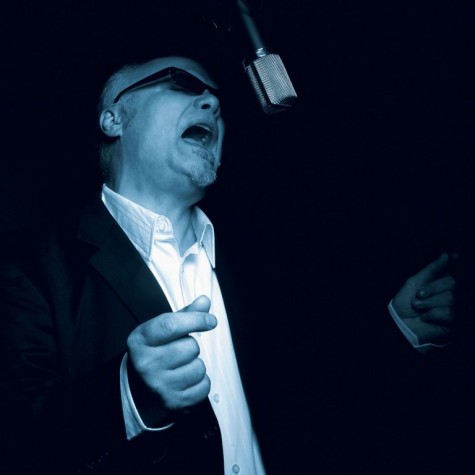
curtis salgadoThis week’s Alive After Five headliner: Curtis Salgado
Go Listen Boise local opener: James Coberly Smith with LeAnne Town

ABOUT CARLOS SALGADO

Award-winning vocalist/songwriter/harmonica icon Curtis Salgado sings and plays with soulful authority, never giving less than 100 percent. He plays each and every show like it’s the most important gig of his career. He recalls the time when his friend, the great chitlin’ circuit singer Buddy Ace, put on the show of his life, singing his heart out, making three costume changes, all while playing at a casual house party. Salgado was floored. “I was just there playing with my band, hanging out in cut-offs and a t-shirt, and there’s Buddy treating the gig the same as if he was performing at the Apollo,” he says. From that moment on, Curtis vowed that every time he got on stage he would deliver his very best shot.

Salgado’s been perfecting his craft since he first began playing professionally in the late 1960s. He fronted his own group, The Nighthawks, inspired John Belushi to create The Blues Brothers, was co-star of The Robert Cray Band and sang and toured with Roomful Of Blues. He released his first of eight solo albums in 1991, hitting the road hard year after year. Salgado and his band toured with The Steve Miller Band and Curtis spent a summer singing with Santana before being sidelined by serious health issues in 2006. He’s battled all the way back, and, after a full and complete recovery, has been tearing up concert stages all over the country.

Winner of the 2010 Blues Music Award for Soul Blues Artist Of The Year, Salgado effortlessly mixes blues, funk and R&B with a delivery that is raw and heartfelt. He moves with ease from the tenderest ballads to the most full-throated stompers. Blues Revue says, “Salgado is one of the most down-to-earth, soulful, honest singers ever, and his harmonica work is smoking and thoroughly invigorating…rollicking, funky and electrifying.” With his Alligator Records debut, Soul Shot, Salgado is set to reach the largest audience of his career.

Soul Shot was produced by funk and R&B guitarist Marlon McClain, drummer Tony Braunagel and co-produced by Salgado. “I wanted to make a soul record that you can listen to and dance to,” says Salgado. And that’s just what he and members of The Phantom Blues Band, along with additional guest musicians, did. Soul Shot speaks loud and clear to contemporary audiences, carrying on the timeless spirit of 1960s and ‘70s R&B. The album features four Salgado originals and seven carefully chosen covers. “I don’t care who writes the songs,” Salgado says, “as long as I can make them my own.” Songs by Johnny “Guitar” Watson, George Clinton, Otis Redding and Bobby Womack flow into and out of Salgado’s own compositions. Each track—the slow-burning ballads and the driving rockers—is delivered with the vocal power and passion of a musical master. “Soul Shot was the most challenging recording of my career,” he says, “and it’s the solid best thing I’ve ever done. That’s a fact.”

Born February 4, 1954 in Everett, Washington, Salgado grew up in Eugene, Oregon. His parents were “hip,” according to Salgado, and his house was always filled with music. His parents’ collection included everything from Count Basie to Fats Waller, and his older brother and sister turned him on to the soul and blues of Wilson Pickett and Muddy Waters. His father liked to sing, and would point out specific passages in a Count Basie or Ray Charles recording for Curtis to pay close attention to, and the youngster soaked it all up. He attended a Count Basie performance when he was 13 and decided then and there that music was his calling. Curtis began devouring the blues of Little Walter and Paul Butterfield, fell in love with the harmonica and taught himself to play.

As a hungry-to-learn teenager, his musical abilities grew by leaps and bounds. He played his first professional gigs when he was 16, and by 18 he was already making a name for himself in Eugene’s bar scene. Salgado quickly developed into a player and singer of remarkable depth, with vocal and musical influences including Otis Redding to O.V. Wright, Johnnie Taylor, Muddy Waters, Little Walter, Sonny Boy Williamson I and II, Lightnin’ Hopkins, Howlin’ Wolf, Otis Spann and Magic Sam. With his band The Nighthawks, he became a must-see act in Eugene and throughout the Northwest. Salgado earned a reputation for high-intensity performances and a repertoire that was informed by his encyclopedic knowledge of blues, soul and R&B music.

In 1973, Salgado met Robert Cray and the two became fast friends. They jammed often, sometimes sitting in with each other’s bands, often playing double bills. In 1975, Salgado had the idea to start a blues festival in Eugene in order to meet and play with as many established blues stars as possible. The festival became an annual event, allowing Curtis to back up, befriend and occasionally house legends including Floyd Dixon, Frankie Lee, Luther Tucker, Otis Rush, Clifton Chenier, Sonny Rhodes and Albert Collins. In fact, it was Salgado—whose Nighthawks backed Collins locally—who crowned the blues legend with the title he would carry for the rest of his career: “The Master Of The Telecaster.”

In 1977, comedian/actor John Belushi was in Eugene filming Animal House. During downtime from filming, Belushi caught a typically balls-out Salgado performance. Afterwards the two got to talking and a friendship grew. Before long Salgado began playing old records for Belushi, teaching him about blues and R&B. Belushi soaked up the music like a sponge and soon developed his idea for The Blues Brothers, first as a skit on Saturday Night Live and then as a major motion picture and a best-selling record album and concert tour. The album, Briefcase Full Of Blues, is dedicated to Curtis Salgado, and, as a nod to Salgado, Cab Calloway’s character in the film is named Curtis. The Blues Brothers’ set list was strikingly similar to the shows Salgado was delivering on a nightly basis.

As Salgado was getting more serious about his career, he realized some of his band mates were not. It was then that Salgado joined forces with Cray and formed a new, more forceful Robert Cray Band. As the stature of the group grew, Salgado found himself sharing stages with blues icons like Muddy Waters, Bobby Bland and Bonnie Raitt. The band performed a transcendent set at The 1977 San Francisco Blues Festival to thunderous ovation before backing up the great Albert Collins.

After Salgado and Cray parted ways in 1982, Curtis went on to front Roomful Of Blues, singing and touring with them from 1984 through 1986. Back home in Oregon, he formed a new band, Curtis Salgado & The Stilettos, and was once again tearing it up on the club scene. He wrote many new songs, and honed his band to a razor’s edge before releasing his first solo album in 1991 on the fledgling JRS label. The group toured the country and began developing a strong following. His friend and fan Steve Miller invited Curtis and his band to open for him on a summer shed tour in 1992. Two years later, Salgado spent the summer on the road singing with Santana. In 1997 he toured with Miller again and performed in front of an audience of millions on NBC television’s Late Night With Conan O’Brien. Salgado then joined forces with Shanachie Records in 1999, putting out four critically acclaimed albums over the next nine years and finding his biggest audience yet.

In 2006 Salgado was sidelined when he underwent a successful liver transplant and then shortly afterwards was diagnosed with and then beat lung cancer. Like so many musicians, Curtis had no health insurance. His medical expenses were paid for in part by a huge outpouring of love and money from his fellow musicians and his huge Northwest fan base. He bounced back with a perfect bill of health in 2008, releasing Clean Getaway. Billboard said the album was a “tour-de-force, showcasing Salgado’s range and power as a vocalist” and that it featured “hard-nosed blues, beautifully nuanced phat and funky R&B.” Blues Revue called it “one of the best records of the year.”

Curtis tours heavily, leaving fans excited and hungry for more everywhere he plays. He has performed at festivals all over the world, including The San Francisco Blues Festival, The Chicago Blues Festival, Memphis’ Beale Street Music Festival, The Tampa Bay Blues Festival, Denver’s Mile High Blues Festival, Toronto’s Waterfront Blues Festival, Thailand’s Phuket International Blues Festival and Poland’s Blues Alive Festival.

Now, with Soul Shot, Salgado is ready for more, tougher and more focused than ever. He will again hit the road hard, proving his reputation as a fire-breathing live performer night after night. And that’s just how he likes it. “Always give it your best,” he says. “Be honest and be real. Treat every show like it’s the biggest night of your life.” With Soul Shot and a long list of tour dates already planned, the biggest performances of Curtis Salgado’s life are surely yet to come.