AT ALIVE AFTER FIVE: HEAR SINGER-SONGWRITER ROYALTY BEN TAYLOR

aa5_2013_Ben_Taylor_2This week’s Alive After Five headliner: Ben Taylor
Go Listen Boise local opener: Grandma Kelsey

ABOUT BEN TAYLOR

Music has always played a central role in Ben Taylor‘s life. His wit and skill as a singer-songwriter showcases an artist who is comfortable in both his own skin and with his impressive musical legacy (he is the son of James Taylor and Carly Simon). His acclaimed previous releases comprise his debut album 2003’s Famous Among The Barns, 2005’s Another Run Around The Sun, and 2008’s The Legend of Kung Folk, Part 1 (The Killing Bite). Highlights from his previous albums include appearances on Good Morning America, The Tonight Show, The CBS Early Show, Last Call with Carson Daly and Howard Stern. Ben also made his acting debut with a recurring role on NBC’s American Dreams and has appeared in the pages of People Magazine, Vogue and even on the cover of Rolling Stone magazine. His reviews and raves have been steady for over a decade now with more to come. Ben Taylor has previously toured with Sheryl Crow, Blues Traveler and Ziggy Marley among others.

Ben’s latest album, Listening, seamlessly merges the sounds and styles of folk, pop, soul, urban, reggae and country/western, running the gamut from sonically spacious acoustic numbers to multi-layered vocals and fresh beats. Taylor explains the album as “An evolution. Some songs were actually recorded four years ago, some were recorded a few months ago, and a few recorded a few weeks ago just in time to make it. This album runs the gamut from both the production style and the period of my life in which they were recorded. These songs are little windows into the last four years of my life.”

AT ALIVE AFTER FIVE: CLASSIC COUNTRY HOEDOWN WITH AUSTIN'S DERAILERS!

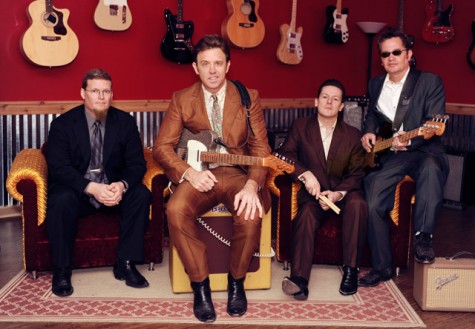
Derailers-5-mThis week’s Alive After Five headliner: The Derailers
Go Listen Boise local opener: Johnny Shoes

ABOUT THE DERAILERS

In a career that has given rise to more than a decade’s worth of fine-tuned, highly anticipated and wonderfully received music, the Derailers continue to build the relationship between song, listener and dance floor.

Each album has been a mix of well-crafted original songs and cover songs so thoughtfully chosen and so representative of the band, fans think they are as original as the band themselves. Challenged by their fans to create a sound that mirrors the shuffle of happy boots on a hardwood floor, the Derailers have fed the hungry dancehall crowds with their classic country beats and a 60s pop sensibility. Fans continue to show their appreciation and admiration with requests for encores long after the last drink has been served.

In terms of sound, the Derailers have gotten smoother with age. As Hofeldt puts it, “I think we have retained the path we are going for. But we have certainly grown as players and allowed other influences to come in.” Their music celebrates the legacies of Buck Owens, George Jones, Roy Orbison, Elvis Presley, Charlie Rich and the Beatles, while still being on the edge of today’s country music. Hofeldt describes his view of country music as, “finding out what love really is, versus what you thought it was when you were a kid.” For all the fans of the Derailers, love is all you need.

AT ALIVE AFTER FIVE: BLUES ROCK WITH TOO SLIM AND THE TAILDRAGGERS

too slim

This week’s Alive After Five headliner: Too Slim and the Taildraggers
Go Listen Boise local opener: Lee Penn Sky

ABOUT TOO SLIM AND THE TAILDRAGGERS

If Tim “Too Slim” Langford only played slide guitar, he would slither around most other blues guitarists and put a ferocious bite on their pride. However, as the sole six-string slinger, songwriter and lead singer of the power trio Too Slim and the Taildraggers, he is a total force of nature, leaving musical tracks for others to try and follow. Now with 16 albums and countless gigs, he remains as untamed and menacing as ever.

Tim “Too Slim” Langford, with his band the Taildraggers, has created an eclectic style of blues and rock that has become a genre all its own. The band’s ever evolving musical direction cannot be classified into any box or category. The eclectic nature of the band allows Too Slim and the Taildraggers to easily crossover and appeal to audiences of various musical tastes.

In 2012, Langford relocated from Seattle to Nashville, Tennessee. Too Slim is backed by the some of the best musicians Nashville has to offer: Scott Esbeck on Bass/Vocals and Jeff “Shakey” Fowlkes on Drums/Vocals.

Too Slim and the Taildraggers’ 2011 album Shiver was nominated for Blues Rock Album of the Year by the Blues Foundation at the 2012 Blues Music Awards in Memphi . Too Slim and the Taildraggers last three releases have also charted 20 plus times in the top 10 on Billboard’s Top Blues Album Charts. Too Slim and the Taildraggers have received Hall of Fame and Lifetime Achievement Awards from The Washington Blues Society, The Cascade Blues Society and the Inland Empire Blues Society. Band Leader Tim Langford has also received numerous Best Band, Best Guitarist, Best Album and Readers Poll Awards from all three Blues Societies and NW Media.

Too Slim and the Taildraggers music have also been featured on MTV’s series The Real World and Road Rules.

AT ALIVE FIVE: THE LEGENDARY DAVE ALVIN PLUS GLB OPENERS AKA BELLE!

dave alvinThis week’s Alive After Five headliner: Dave Alvin
Go Listen Boise local opener: a.k.a. Belle

ABOUT DAVE ALVIN

The rules Dave Alvin has followed throughout his 24 years as a solo artist were discarded during the creation of his 11th album, Eleven Eleven.

For the first time in his career he wrote songs while touring and recorded during breaks on his tours in 2010 with the Guilty Women. He used musicians he had not recorded with since his days in the Blasters, and for the first time ever, he sang on a record with his brother Phil, the lead singer of the Blasters.

“While we were growing up there was a firm line between Phil and me,” Dave says, referring to Blasters’ division of labor: Phil sang, Dave wrote the songs and played lead guitar. “The main reason I decided to have him sing with me was that we’re not going to be here forever; we might as well have fun. Life is too short.”

Eleven Eleven features three duets: Phil and Dave on the simmering blues “What’s Up With Your Brother”; Dave and Christy McWilson from the Guilty Women on the gentle country number “Manzanita” and the whimsical song, “Two Lucky Bums,” the final recording of Dave and his best friend, the late Chris Gaffney. The rest of the material, rich in stories that stretch from R&B royalty to labor history to Harlan County in Kentucky, was written over the course of seven months. As he says with sly chuckle: “The songs are not necessarily true, but they’re all autobiographical.”

“It is the first album in which every song was either written or conceived on the road,” Dave says. “When I go on the road, I shut off that part of my brain. It’s really hard for me to write while touring, but I wanted to try something different on this album.”

“Whenever we had a break and I’d return home, I’d call my revolving cast of the regular guys, see who was available to go in and record, cut a song, and head back on tour. With the exception of (the late legendary R&B saxophonist) Lee Allen, I had never used anybody from the Blasters on my solo records. Then I thought, well why not use them?”

While the backing cast varies, the constant through Eleven Eleven is Dave’s assured guitar-playing, whether it’s finger-picking on an acoustic against an accordion on “No Worries Mija” or blazing riffs on electric over a Bo Diddley beat on “Run Conejo Run.” Eleven Eleven reunites Dave with pianist Gene Taylor, whose barrelhouse blues sound has not been heard on an Alvin project since the final Blasters album, 1985′s Hard Line.

Taylor was one of several blues veterans who would pass through the band Dave and Phil Alvin founded in their hometown of Downey, Calif., in the late 1970s. Beginning in 1980 with the Blasters’ debut album, Dave’s songwriting pioneered the marriage of punk attitude with blues, California country and rockabilly. The brothers called it “American music”; it would eventually be labeled by others as roots rock.

The Blasters released four studio albums between 1980 and 1985 and Dave’s songs “Marie, Marie,” “Border Radio” and, of course, “American Music” became staples of the burgeoning genre.

Dave’s solo career began with 1987′s Romeo’s Escape and in 2000 he won the traditional folk Grammy for his collection of songs from the early part of the 20th century, Public Domain: Songs From the Wild Land.

Soon thereafter he began recording for Yep Roc, which released his last three albums, West of the West, Ashgrove and Dave Alvin and the Guilty Women.

“The songs on Eleven Eleven, Dave says, “are all about life, love, death, loss, money, justice, labor, faith, doubt, family and friendship. The usual stuff.”

“Mortality has been an issue on my mind ever since Ashgrove. Since finishing that album, I lost some great friends — Gaffney, Amy Farris and Buddy Blue of the Beat Farmers. That weighed on me.”

The result is an album with songs rich in vivid stories, taking listeners on a bounty hunt in “Murrietta’s Head,” a tawdry scene of seduction in “Dirty Nightgown” and a true crime recollection in “Johnny Ace is Dead.” Dave’s guitar work punctuates each tale, reinforcing moments of urgency, remorse and reflection.

Despite making the album with different musicians at sessions separated by weeks of time, Dave was consistent in getting a gritty, bluesy feel from start to finish. The studio, and engineer Craig Adams, played significant roles in getting that feel.

He recorded the album at Winslow Court Studio in Hollywood, the same studio where West of the West and Ashgrove were recorded, both of which Adams engineered.

“Winslow Court is an old Foley studio from the 1930s,” Dave says. “It’s about the size of Sun Studios and you can have everyone in a circle so you can make eye contact. A lot of the musical dynamics and the arrangement on the record comes just from being able to see each other. If everyone were in a cubicle you wouldn’t get that vibe.”

It’s also the one studio where Dave can place his amp beside him and turn up the volume to capture the essence of a live recording.

“All great records, up to a certain point in time, were just a bunch of guys in a room. The Blasters tended to record the same way, but because of concerns of engineers I wouldn’t get my amp right next to me. The way Craig won me over was during the recording of Ashgrove. I asked ‘mind if I make it louder?.’ That was one of the few times an engineer has said ‘turn it up.’”

AT ALIVE AFTER FIVE: PICKWICK!

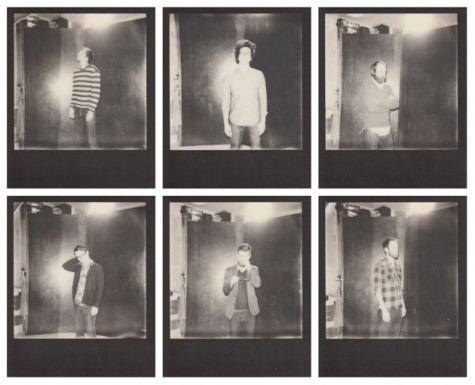
PICKWICK_Polaroids_1This week’s Alive After Five headliner: Pickwick
Go Listen Boise local opener: Thomas Paul

ABOUT PICKWICK

Pickwick was formed in 2008 when singer Galen Disston began writing songs on his acoustic guitar while drummer Matt Emmett kept time in the background. The duo settled on the name as an homage to ‘The Ostrich,’ an obscure dance song written by Lou Reed and released by Pickwick Records in 1964. With the later additions of Emmett’s childhood friend Cassady Lillstrom on keys, Kory Kruckenberg on vibraphone, and brothers Garrett and Michael Parker on bass and guitar, the six-piece began playing shows in small clubs around Seattle.

By the beginning of 2010 the band was in a state of disarray. Frustrated by the direction the music was taking, the band began having discussions about throwing in the towel and going their separate ways. Up until that point, band members had little to do with the writing process and simply added color to Disston’s songs. Ultimately, the band decided to throw out all of their old material and start over from scratch with a new collaborative approach to songwriting. This rebirth allowed the band to take a new look at their individual and collective strengths, as well as look to new places for inspiration.

Raised on indie rock and a love for lo-fi garage bands, the members of Pickwick found themselves entrenched in underground gospel and blues recordings from the 1950s and 60s as well as popular northern soul artists. This new reference point combined with a renewed appreciation for UK bands like The Animals, Spencer Davis Group, and The Zombies helped the members of Pickwick cultivate their own unique take on garage rock, gospel, and 60s-era pop while interpreting those genres through a modern lens.

Along with a shift in musical aesthetic, Disston began exploring darker, more complicated themes in the lyrics of his songs. Contrasting stories of murder, mental illness, and confused sexual identity with major chords, three-part harmonies, and church organs. This unlikely pairing quickly became a mainstay of the band’s approach to songwriting. “I’ve always been drawn to music that seems a bit schizophrenic,” says Disston.

Inspired by a new burst of creative output, the band wasted little time to self-release their music. Instead of waiting to record a full-length record, the band decided to do things on their own terms, putting their music out exclusively on vinyl with three installments of a 7-inch series. Each 45 was accompanied by a record release show at a different club in Seattle. With the release shows under their belt and a series of DIY live videos gaining attention online, the band had cultivated a strong local following by the middle of 2011.

By late 2011, Seattle independent radio station KEXP caught wind of what the band was doing and began playing the band’s music on-air. By the end of the year Pickwick’s 7-inch series ‘Myths’ was voted the #9 record of the year by KEXP listeners alongside artists such as TV on the Radio, Fleet Foxes, Bon Iver, Wilco, Adele and Radiohead.

The band released their first full-length album Can’t Talk Medicine in early 2013.