NEW RELEASE OF THE WEEK: PET SHOP BOYS' NEWEST ALBUM 'ELECTRIC'

ELECTRICBUY THE CD HERE
BUY THE VINYL HERE

“Everything about tonight feels right and so young,” sings 58-year-old Neil Tennant on Vocal. “And everything I want to say out loud will be sung.” As his thin yet perennially yearning voice lingers, 53-year-old Chris Lowe’s synths throb and rush, breaking over the relentless beat in big Balearic waves of ecstasy. It is a perfect encapsulation of the communal, near spiritual rapture of great dance music, wrapped up in a blissed-out, fist-pumping techno anthem. For a couple of late-middle-aged men on their 12th album in nearly 30 years, the Pet Shop Boys sound like they are having a really good time.
Just last year, on Elysium, their last album with major label Parlophone, the long-serving electropop duo sounded adrift and even a little bitter, with an over-smooth American disco production and songs about their fading appeal. Maybe they were saving all the good stuff for their own new label, X2. Electric has a spring in its dance steps, marrying the single-mindedness and bright beats of club culture with their own characteristic melodiousness, finely attuned sense of song structure and slightly detached air of being both in the song and above it.
The Pet Shop Boys have always treated trashy pop as a form of art. Tennant’s strongest lyrics manage a difficult blend of ironic awareness and complete engagement, enabling songs to release genuine emotion in satirical situations. Electric is an album of neatly observed tracks about nightlife; a tableau of unrequited desire, impossible love and inevitable heartbreak, that sounds like just the kind of thing to dance away your troubles to.
It must be odd being electropop veterans who have seen the future take shape in their own image. Their vintage synths have a kind of brash colourfulness and melodic emphasis that separates them from the aggressively disjointed attack of the boldest new beats, yet the 21st-century Pet Shop Boys still sound decidedly modern. Producer Stuart Price (Madonna, The Killers) is a very good fit, balancing textures and colours while maintaining constant underlying movement. Fluorescent is weird and mesmeric, awash with shimmering sound effects and pulsing on an orgasmic vocal gasp, while a cover of Bruce Springsteen’s The Last to Die is typically mischievous, turning the rock icon’s post-Iraq belter into a sleek pop anthem about domestic dysfunction. An instant standout is Thursday, which has all the hallmarks of an Eighties classic given a contemporary edge by the perfectly pitched interjections of British rapper Example.-The Telegraph
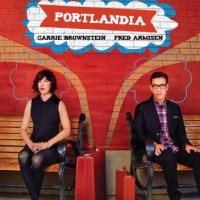
NEW DVD/BLU-RAY: THE HILARIOUS THIRD SEASON OF PORTLANDIA!

portlandiaBUY THE DVD HERE
BUY THE BLU-RAY HERE

Fred Armisen and Carrie Brownstein’s Portlandia has amounted to a kind of frenzied pedicab tour of the city of Portland, Oregon by way of Apple Maps. Though residents of the city continue to debate whether or not the series is good for local tourism, cameos by mayor Sam Adams would seem to suggest a loving symbiosis between the city and its fictional depiction. Yet in the show’s third season, Armisen and Brownstein seek to expand both its audience and its relevance, making several excursions outside the city limits.

The series continues its somewhat more combative tone with respect to today’s youth in another music-related sequence set outside Portland’s city limits. Playing old-school punk “Gen Xers,” Armisen and Brownstein recruit Kurt Loder and other symbols of MTV’s heyday to “take back” the network from tweens. They head to Times Square and raid MTV’s headquarters, successfully taking over the airwaves from the head honcho, a world-weary tween girl, who coldly insists “music is dead.” The girl then goes on to point out the irony of nostalgia victims trying to “take back the youth-oriented channel from the youth.” Given that even the older generation refuses to tune in, she turns out to be right. By this point, the depiction of failed revolutions has already become one of the season’s winning comic routines.

A jab at raw milk curdles on arrival, and the scene in which a girl spends her entire meditation class fantasizing about the man across from her feels like a joke we’ve already seen a dozen times, but these are exceptions to the rule. Portlandia’s best gags instead all seem to embody a kind of post-Occupy disillusionment, and season three’s less provincial outlook ensures the show’s continued relevance. It’s less intensely fixated on the city from which the series derives its name, and Armisen and Brownstein’s willingness to expand the scope of its satire has ultimately led to something more sustainable, if a little less local.-Slant

CLICK HERE FOR OTHER NEW DVD/BLU-RAY RELEASES!

THRIFTSTORE MASTERPIECE'S 'TROUBLE IS A LONESOME TOWN' AND OTHER NEW RX CD RECOMMENDATIONS

thriftstore masterpiece BUY THE CD HERE

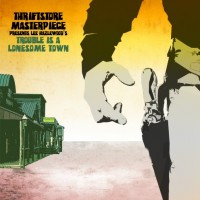
Thriftstore Masterpiece is a revolving music collective devoted to paying homage to the underdog records of years past. The debut album revisits Lee Hazlewood’s 1963 lost classic Trouble Is A Lonesome Town and features Pete Yorn, Frank Black, Isaac Brock, Courtney Taylor-Taylor (The Dandy Warhols), Eddie Argos (Art Brut), the late Larry Norman and more. 

In 1963, Lee Hazlewood released his debut album Trouble is a Lonesome Town to little fanfare. It was a collection of solo acoustic songs stitched together with a narrative that described life in a fictional small town inhabited by outlaws, thieves, and down-and-out laborers. The album was hokey, but hip. Corny, but cool. It evoked a bygone era of pastoral American towns and their sometimes seedy underbellies, somewhat like a darker version of the Andy Griffith Show or a more sinister Prairie Home Companion. More importantly, it was a fully realized concept album that predated the trend that is so common in today’ s music world. Hazlewood had originally intended the songs as demos for his publisher, in hopes that other artists might someday record them. A half century later, the music collective known as Thriftstore Masterpiece has done exactly that.

Producer I band leader Charles Normal explains “I first came across the record around the turn of the millennium while living in Oslo, Norway. I found it in a secondhand junk shop and it struck a nostalgic note somewhere within me. It made me homesick for the panoply of Americana I had experienced while slumming it in the Southwestern border towns and California desert whistle stops I drifted through when I first started playing music on the road. The record didn’t leave my turntable for months. Years later, I started to envision the record as a more orchestrated statement and began recording the basic tracks in my studio. My brother, singer Larry Norman, lent his voice to a couple of the tracks, but when he passed away from a heart attack in 2008 I fell into a deep funk and put the project on the back burner. I couldn’t bring myself to harmonize with his vocals … it was just too emotional to deal with. It wasn’t until much later, prompted in part by Isaac Brock, that I dusted off the tapes and hard drives and began to finish it. I went through my address book and started calling friends who happened to be in possession of great voices to see if they were interested in joining in.”-musicdirect

CLICK HERE FOR OTHER NEW RX CD RECOMMENDATIONS!

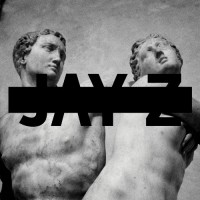
NEW RELEASE OF THE WEEK: JAY-Z'S MAGNA CARTA HOLY GRAIL

jay zBUY THE CD HERE

The first thing listeners will say to themselves upon clicking play on Magna Carta Holy Grail, the latest in music and technology synergy (or whichever industry buzzword one is wont to use), is, “Wow, Timbaland produced this?” Jay-Z has a list of producers with whom he’s had legendary rapport (Just Blaze, DJ Premier, and Kanye West, for example), but MCHG reminds us to not forget about Timothy Moseley. Unlike Timbaland’s subpar contributions on The Blueprint 3, Timbo completely avoids “Timbaland-isms” that would otherwise make a cut sound like “Jay-Z on a Timbaland track” rather than just a Jay-Z track. Whether it’s the Soul-Rock intro that is “Holy Grail” or “F.U.T.W.,” which sounds like it would be right at home following up “So Ghetto” on Vol. 3, Timbaland hits the right notes time and again on this one.

Hit-Boy’s excellent work on “Somewhere In America” lays the foundation for Jay to reveal that even as he shakes hands with Presidents and headlines Rock festivals, he still doesn’t feel welcome: “New money, they lookin’ down on me / Blue bloods, they tryna clown on me / You can turn up your nose, high society / …You should come to the housewarming / Come and see what your new neighbor ‘bout / Yellow Lambo in the driveway / One-thirty-five, I’m on the highway.” It may just seem like more stock Jay-Z braggadocio, but there’s real bitterness here.

Magna Carta Holy Grail is where Jay-Z’s emceeing finally meets his “High Rap” ambitions. This is easily the best rhyming Jay’s done since American Gangster. But a sharp Shawn on the mic isn’t a surprise. What is a surprise is that this is the most cohesive project Jay’s put together since The Blueprint. The project is smartly produced, with Timbaland’s aforementioned contributions rewarding Jay’s faith in his old “Big Pimpin’” buddy, with contributions from Adrian Younge (of Twelve Reasons to Die withGhostface Killah fame) and others adding fine touches to the record. 

What really makes this project stand out from the overwhelming majority of major label Rap release in 2013: everything on this project sounds like it was recorded for this project. Beats don’t sound like they were chosen from a producer’s C:/ drive, and Rick Ross’ verse doesn’t have nothing to do with anything (see “Accident Murderers” from Nas’ Life Is Good). Who knows whether Jay-Z knew what he had in mind when he got into the kitchen, but instead of adding every spice available to him, he used only what he needed—and the recipe benefitted because of it.-HipHop Dx

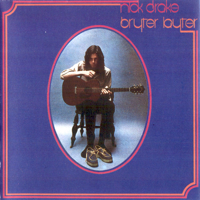
THE VINYL WORD: NICK DRAKE'S ALBUM 'BRYTER LAYTER' AND OTHER RECOMMENDATIONS!

new vinylBUY THE VINYL HERE

With even more of the Fairport Convention crew helping him out — including bassist Dave Pegg and drummer Dave Mattacks along with, again, a bit of help from Richard Thompson — as well as John Caleand a variety of others, Drake tackled another excellent selection of songs on his second album. Demonstrating the abilities shown on Five Leaves Left didn’t consist of a fluke, Bryter Layter featured another set of exquisitely arranged and performed tunes, with producer Joe Boyd and orchestratorRobert Kirby reprising their roles from the earlier release. Starting with the elegant instrumental “Introduction,” as lovely a mood-setting piece as one would want, Bryter Layter indulges in a more playful sound at many points, showing that Drake was far from being a constant king of depression. While his performances remain generally low-key and his voice quietly passionate, the arrangements and surrounding musicians add a considerable amount of pep, as on the jazzy groove of the lengthy “Poor Boy.” The argument could be made that this contravenes the spirit of Drake’s work, but it feels more like a calmer equivalent to the genre-sliding experiments of Van Morrison at around the same time. Numbers that retain a softer approach, like “At the Chime of a City Clock,” still possess a gentle drive to them.Cale’s additions unsurprisingly favor the classically trained side of his personality, with particularly brilliant results on “Northern Sky.” As his performances on keyboards and celeste help set the atmosphere, Drake reaches for a perfectly artful reflection on loss and loneliness and succeeds wonderfully.-allmusic

CLICK HERE FOR MORE NEW VINYL RELEASES!