JAMES BLAKE'S 'OVERGROWN' AND OTHER NEW CD RECOMMENDATIONS

james-blake-overgrown-410PREVIEW/BUY THE CD HERE
PREVIEW/BUY THE VINYL HERE

In a well-publicized late 2011 interview, James Blake drew his line in the sand on the Great Dubstep Debates. The boy who fell for the emotional resonance of bone-disintegrating sub-bass only after years of playing piano privately came out against the American version of guys like Skrillex (whom he couldn’t even be bothered naming). Such performers, Blake contended, appealed strictly to a “testosterone-driven, frat-boy market” that couldn’t be more different from the Feist-and-Joni covers and Bon Iver duets pouring out of the Londoner who’d just turned 23. Blake argued that his music was not only more egalitarian– appealing to women and men equally– but was also a purer representation of dubstep as an idea. It was a misrepresentation of American dubstep’s audiences and a presumptuous statement about What Women Want, sure, but at the same time, it was hard to fault Blake for forcefully trying to stake his claim to a patch of land within a genre broad enough to incorporate a rave resurgence and a brooding folkie.

Overgrown is a showier album than Blake’s eponymous 2011 debut, incorporating more gospel and R&B elements and a wider variety of textures. In a way, it feels like Blake’s meeting himself midway between his LP and EP personas. The string of EPs he released before putting his blurred face and name on the cover of an LP cast Blake as the latest UK producer prodigy, capable of modern classical pieces and tracks built around Aaliyah and Kelis samples. On his first LP, however, Blake opted for the singer-songwriter move, making heart music instead of head music, alienating certain purists while gaining new fans who have zero interest in his work on the Hemlock label.

On Blake’s own admittedly modest terms, Overgrown is marked by extremes. The album starts in the mode of the 2011 LP on which he rued childhood relationships and pondered his dreams. On the title track, he mewls “I don’t want to be a star/ But a stone on the shore,” confessing he prefers to blend into his surroundings rather than draw attention to himself. For a guy who puts a crisp, pensive photo of himself on his album cover, it’s a questionable stance, and his delivery is self-serious enough to nearly tip over into self-parody. It pales in comparison to James Blake opener “Unluck”, though it’s saved from schmaltz through Blake’s skill at investing even the cheesiest sentiments with a palpable anxiety.

There’s showy, and then there’s “Take a Fall for Me”, a collaboration with RZA, who Blake gives free rein to smear awkward romantic imagery all over his track. It’s easy to understand why the pair would collaborate: their production styles aren’t dissimilar, both showing a fondness for gloomy, bass-heavy soundscapes rooted in R&B. Why RZA was asked to rap, however, is hard to understand. If you want to hear the phrase “tight as the grip of a squid” on a James Blake album, or an American’s stereotype of a proper British meal (fish & chips, Guinness), you’re in luck. For the rest of us, “Fall” is Blake’s first out-and-out failure, the sort of song that should have been relegated at the very least to bonus track status, and probably should have been kept private altogether. 

Overgrown is not as wall-to-wall great as his debut, but fans of the first LP will still find much to admire. The most promising development is his indulged fondness for various permutations of R&B and gospel styles, best evidenced on the album’s great first single “Retrograde.” Self-described as a song about falling in love, it balances the solemn soul of Bill Withers’ “Grandma’s Hands” with periodic bursts of passion, via Blake shouting “suddenly, I’m hit!” Throughout the album, he successfully splits the difference between the sultry bedroom vibes of R&B’s resurgent Quiet Storm moment and the more mundane life of a British “bedroom” artist fond of keeping to himself. “To the Last”, in particular, tiptoes around a Sade-style smooth-soul composition, aided by the synthesized sounds of waves crashing ashore.

Blake’s deconstructive take on R&B is similar in spirit to that of How to Dress Well’s Tom Krell. In a recent interview with Pitchfork TV, Krell explained his writing process as one of locating bodily sensations that haven’t yet shaped themselves into recognizable emotions. Suddenly you’re hit, in other words, but you don’t yet know if that feeling is joy, anxiety, frustration, or terror– you’re only aware that something’s there, and you try to freeze it, to examine it more closely, instead of simply slotting it in a category and moving on. This is exactly what Blake does so well (and, for what it’s worth, RZA doesn’t): locating these sensations, and conversing about them. On “I Am Sold”, he even manages to explain the process, by mulling a single phrase over and over, tweaking it, and approaching it from different directions: “speculate what we feel.” Instead of worrying about where he fits in a broader musical landscape, or whether he’s a “star” or not,” this is Blake’s comfort zone. Whether he’s making bass-heavy bangers, quiet meditations, or increasingly of late, something in-between, Blake is a modern master of emotional speculation.Pitchfork

CLICK HERE FOR OTHER NEW RX CD RECOMMENDATIONS!

JONNY FRITZ (FORMERLY JONNY CORNDAWG) IN-STORE TUESDAY, APRIL 9

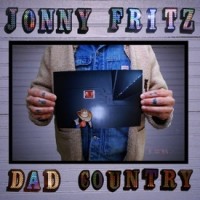
johnny fritzJonny Fritz (formerly Jonny Corndawg) will perform live at The Record Exchange (1105 W. Idaho St., Downtown Boise) at 6 p.m. Tuesday, April 9. This free, all-ages Record Exchange in-store is sponsored in part by Boise Weekly. Jonny Fritz is performing at Neurolux later that night as part of Radio Boise Tuesdays and we have tickets for sale at the store. Pre-order his new ATO Records release Dad Country (out April 16) at the in-store and get a signed CD booklet! RSVP HERE.

ABOUT JONNY FRITZ

DAD-COUNTRY_sml1Nashville songwriter Jonny Fritz’s work ethic and boldness have paid off in spades. It’s been a big year for Jonny with opening stints for Alabama Shakes, Deer Tick, Dawes, Shooter Jennings and rockabilly legend Wanda Jackson and kudos from CMT and Rolling Stone, among many others. His third full-length album, Dad Country, is set for release on April 16, 2013.

Produced by Jonny and Dawes’ Taylor Goldsmith, recorded at Jackson Browne’s Los Angeles studio and finished up in Music City, USA, this is a breakthrough album, balancing Fritz’s earthy trademark humor and unfiltered worldview with some of his darkest material to date. The album has a Nashville sound kept aloft on a sure Southern Californian wind, no doubt from the influence of his backing band: Taylor and Griffin Goldsmith, Tay Strathairn and Wylie Gelber of Dawes, Jackson Browne, and his Nashville band of Spencer Cullum Jr, Joshua Hedley, Taylor Zachry and Jerry Pentecost.

Dad Country is also his first release under his real name Fritz with Jonny ditching the “Corndawg” moniker he’d carried since his early teens. Now a music veteran with a decade of touring under his belt, he’s grown into an accomplished, mature voice in country music. Co-producer Goldsmith says, “Funny as they can be at moments, his songs access realities and experiences that we’re all familiar with but sometimes fail to consider the depths of. I was really honored to work on the record. We tracked for two days and arranged the songs on the spot. Everyone really responded to each other’s ideas and the whole experience was really inspiring and easy. I chalk it up to the quality of Jonny’s songs on this record.”

After nearly a decade spent on the road (since his late teens), it was well-earned luck that brought Jonny together with dream team that would bring Dad Country to life – including none other than Jackson Browne. Originally scheduled to record at another Los Angeles studio, Jonny and co-producer Taylor Goldsmith were left scrambling for a backup plan when their original producer flaked. As it happened, they were playing a show in Hollywood that week and Browne was in attendance. After the show, Browne approached Jonny and, learning of their troubles, generously offered up his studio. Just three weeks later, they were all holed up at Browne’s, recording the new album.

Fritz and Goldsmith had rehearsed most of the songs together, but the rest of the band had to learn them run-and-gun style in the studio, nailing many of the songs on the first time ever playing them together. In just four days, they pounded out 14 tracks in one long, inspired rush and this excitement pervades the results. “It was really spontaneous,” Fritz says.

“We just pulled it out of our proverbial asses as we went along.” Fritz later re-recorded two of the songs that had evolved significantly on the road since the studio session – the Red Simpson-esque “Fever Dreams” and down-home lament “Ain’t It Your Birthday” – using his own band back in Nashville. With these, the record was ready and dead-on with Jonny’s vision of Dad Country.

Like his songwriting heroes Tom T. Hall, Michael Hurley, Roger Miller and Clint Black, Jonny can turn phrases ’til you’re dizzy, all while plucking your heartstrings or capturing a sharp, lonesome vulnerability that never seems lost or brooding. For Jonny Fritz is no tear-in-the-beer sap moaning over his lost love and troubles. He’d rather cry running marathons than sitting on a barstool. Rather than Outlaw Country, he prefers we think of him as “someone’s weird Dad” and a musician of his own bent. He writes his every song with that deep country-music impulse to turn real experience into lyrical form.

Born in Montana and raised in Virginia, Jonny grew up in the middle of mountains and weirdos of every allegiance, developing a blind man’s ear for the slightest turn in a tale or human voice. He dropped out of school and left home early, totally undaunted, and toured the country on his motorcycle, selling just enough music to keep his freedom and stay ahead of bitterness. “If I could sell three CDs a night, I would have enough for gas and to make it to the next town.”

Cramming six lifetimes into six years and collecting triumphs and heartaches every corner of the globe, he eventually wound his way toward Tennessee. “Not because I wanted to break in over on Music Row and ‘make it,’ because I knew I didn’t really belong there,” he says. “I wanted to learn the ways of country music … to get my education in this cool old world that exists only in Nashville.”

While immersing himself in the music world, Jonny began running marathons from Philadelphia to Barcelona and pounding out his signature leather works – the dog collars and guitar straps – seen all over Nashville and half the musical universe. He found himself in NYC for a year trying to save a relationship, and its slow, painful unraveling (and demise) inspired Dad Country’s bleakest, heartrending tracks, including “All We Do Is Complain” and “Have You Ever Wanted to Die.”

These days, life has never been better for Jonny Fritz. He’s back in Nashville again and putting down roots – and has even gone and bought himself a house. “It just keeps getting better. Now, the band is getting paid, I’m getting paid, everybody’s happy, and we’re packing ‘em in when we play.”

“This is the dream life. I couldn’t really ask for anything else.”

BANG YOUR HEAD AGAINST THE HEADBANGER'S WALL AT THE RX!

headbangersapr120Do you like it hard and heavy? Then come to The Record Exchange and visit The Headbanger’s Wall, a listening station devoted to some of today’s best bands pummeling you with raw power and raw emotion.

The Headbanger’s Wall currently features Death Wolf, Hypocrisy, Thy Art is Murder, Six Feet Under, Warbeast, Terror, Conditions, Intronaut, Anthrax, Volbeat, Finntroll, Lordi and Dark Sermon. Come melt your face with us.

Purchase Headbanger’s Wall titles HERE.

THE VINYL WORD: THE BLACK ANGELS' PSYCH-RICH 'INDIGO MEADOW'

black-angels-indigo-meadow_article_story_mainPREVIEW/BUY THE VINYL HERE

Over the past few years The Black Angels have emerged as the patriarchs and greatest ambassadors for modern psych rock. They’re from the psych-rich city of Austin, have been at it for longer than most and have used their stature to help along worthy up-and-comers. In 2008 they founded the Austin Psych Fest, the nation’s preeminent celebration of the genre. Their music is full of reverb and warble, acid trippiness, jangly tambourines and a certain menacing, droning heaviness all their own. It’s all gold to psych fans, but appealing to those not already immersed in the scene has been a different story. In 2010 they released Phosphene Dream, easily their most dynamic, energetic and focused album to date. It still droned, it was still heavy, it was still The Black Angels, but its tightened arrangements made it less intimidating and more appetizing on a broader scale. They even played the poppy, British Invasion-inspired single “Telephone” on Letterman.

The Black Angels’ fourth album, Indigo Meadow, isn’t nearly as approachable as its predecessor, existing more as an iteration of a particular, darkened Alice in Wonderland-esque aesthetic than as a collection of songs that pop individually. If Phosphene Dream was akin to speeding across a sun-scorched desert (which it kind of was), Indigo Meadow is a dark, suffocating, drowsily medicated trip through…well, actually, some kind of lightless indigo meadow is a pretty good way to describe the tonal setting for most of the album. The effects are eerier, and catchy rhythms and smooth verse-to-chorus transitions are secondary to instilling a sense of hazy, slowly creeping disorientation. The album, particularly on songs like “Evil Things,” “Holland” and “Twisted Light,” seems to wallow in its own darkness rather than thrusting forward with the energy and momentum that was present on Phosphene Dream or even previous Black Angels albums.

Helping fuel the album’s psychedelic wooziness is what sounds like a heavy Doors influence. On “The Day,” frontman Alex Maas sings with sing-song-y vocal inflections that immediately bring Jim Morrison to mind (there’s even a call to “run, run, run”). “Love Me Forever” features incredibly heavy, Morrison Hotel-era organ, and much of the organ work throughout the rest of the album is also reminiscent of Manzarek’s. War imagery is present as well on “Broken Soldier,” a song that proceeds like a march and step and notes how, “It’s hard to kill when you don’t know whose side you’re on.” But this isn’t exactly new territory for The Black Angels; one of their first singles, “The First Vietnamese War,” also tackled the ills and confusions of combat head-on.

Indigo Meadow‘s catchiest song by far is “You’re Mine,” a track that lies in stark contrast to the rest of the album. It’s a driving, infectious and relatively poppy message to a lover, with neither party involved being able to—or deep down, wanting to—rid themselves of the other. It’s the album’s clear standout track, and part of the problem with Indigo Meadow is that there aren’t many tracks like “You’re Mine” that strike a deep and ringing chord like there have been on previous Black Angels albums. There are plenty of promising riffs and catchy little guitar lines throughout, but a lot of the time the songs they belong to don’t end up developing into anything you can really take home. They do help add texture to the dark but fresh psychedelic palette The Black Angels have cultivated, though. The album is a disjointed trip but a trip nonetheless, and few can take listeners on a wandering journey better than The Black Angels. –Paste

CLICK HERE FOR MORE NEW VINYL RELEASES!

CHARLES BRADLEY'S 'VICTIM OF LOVE' AND OTHER NEW CD RECOMMENDATIONS

charles-bradley-victim-of-lovePREVIEW/BUY THE CD HERE
PREVIEW/BUY THE VINYL HERE

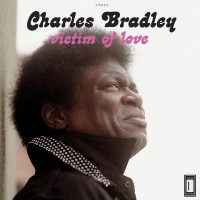
Charles Bradley, the archetypal late bloomer, surfaced a few years ago with one hell of a backstory. So good that he’s the subject of a documentary, “Charles Bradley: Soul of America,” which has been making the rounds at film festivals.

Bradley was a onetime James Brown impersonator whose hardships had taken him rambling across the country, working as a cook in Maine, living with his mother in Brooklyn, N.Y., and enduring the murder of his brother.

Then, in 2011 at the tender age of 62, Bradley released his debut album on Dunham Records, a subsidiary of the soul label Daptone. “No Time for Dreaming” explored the dark side of Bradley’s journey and introduced him to an audience raised on Sharon Jones and the like.

The subject matter on his sophomore album is love, and you can guess just how lucky Bradley has been, from the song titles alone: “Love Bug Blues,” “Crying in the Chapel,” “Through the Storm.”

Bradley is linked to Brown, his idol whom he first saw at the Apollo Theater in ’62, but as a vocalist he’s more aligned with Bettye LaVette. Each performance on “Victim of Love” is a musical exorcism from the gut, every note a wail through clenched teeth and closed eyes.

You hear him at the peak of his powers on the title track, whose acoustic soul reels in the band and lets Bradley tell his story, one wounded sentiment at a time. – The Boston Globe


CLICK HERE FOR OTHER NEW RX CD RECOMMENDATIONS!