CIMS HANDPICKED: GILLIAN WELCH AND HONEYHONEY; HEAR THEM AT THE RX!

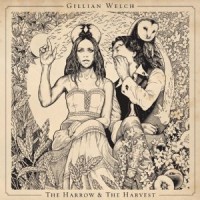
Gillian Welch
The Harrow and the Harvest

The Harrow and The Harvest, Gillian Welch’s new record, is both a product of and is unrelated to those years in-between. Best to forget that. What it is, indisputably, is the product of two people (one of them being husband/guitar god David Rawlings) who have become so entwined in one another that the songs and the singing and the playing on this record seems to exude from a single voice. This is the sound of two people in a room, playing to one another, with one another. This is the sound of the room in which the two people are playing. This is the sound of two voices, locked in unison, locked in harmony. The sound of two people playing live, with no overdubs, and very few takes. Two people making music together as if they were one soul combined. You need this.

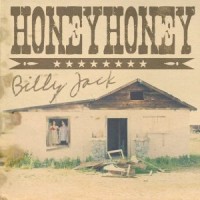
honeyhoney
Billy Jack

Bubbling up from the underground of the Los Angeles music scene with an indelible Nashville-influenced sound, indie roots duo honeyhoney have arrived with their new full-length album, Billy Jack. Produced primarily by Raymond Richards (Local Natives), Billy Jack finds twenty-something musicians Suzanne Santo and Ben Jaffe threading sweet melodies with big acoustic guitar sounds, percussive banjos and countrified fiddles. honeyhoney’s sexually tinged, bruised knee honeysuckle take on roots music must be heard to be understood, and Billy Jack pumps with the sound of hearts on fire, and real instruments played by people who really mean it. The album’s first single, “Turn That Finger Around,” is a steady-grooving story detailing hard times with a memorable hook and some Southern twang. A slow burn seethes beneath the gospel-flavored tale of romantic doubt, “Don’t Know How (Slow Mover),” while strings baste the mourning ballad “Angel of Death” and “Thin Line” explores dissatisfaction, good times and loss through the blues. From the dark smolder of “Glad I Done What I Did” and stark piano of “LA River,” to the euphoric romp of “Let’s Get Wrecked” — honeyhoney’s music embraces the sound of what it means to be alive.

CIMS HANDPICKED: MAYER HAWTHORNE, WILD FLAG, FAN MODINE AND MELISSA FERRICK – NOW ON SALE AT THE RX!

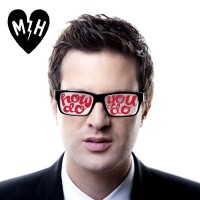
Mayer Hawthorne
How Do You Do

The “retro soul” tag is added to almost any contemporary work that sounds like it was originally recorded before 1980, and Mayer Hawthorne is aware of how trends come and go. But, he says, he’s not interested in taking it back to the “good old days,” as much as he is in creating the “new good days.” And to fans like producer Mark Ronson, who said, “I have no idea what this is, old or new, but it’s fucking good!!!” upon first hearing Hawthorne’s music, age ain’t nothin’ but a number. On How Do You Do, Hawthorne proves that he is not part of a trend. The classic Motown sound that provided the blueprint for his self-produced independent debut, A Strange Arrangement, remains, but is joined on How Do You Do by music reminiscent of late 1960s California pop and the best work from the likes of Steely Dan and Chicago. But that’s not all. On “The Walk,” the first single from How Do You Do, Hawthorne plays a man scorned and content with saying “So long, you did me wrong” to the lady in his life. “A Long Time” is both a brilliant homage to Steely Dan’s “Hey Nineteen” and a storied history of Hawthorne’s beloved Detroit, followed by a duet – yes, duet – with the incomparable Snoop Dogg on “Can’t Stop.” You need this.
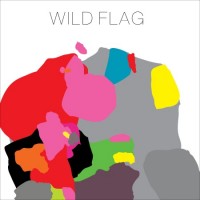
Wild Flag
Wild Flag

The four musicians who make up Wild Flag have known one another for well over a decade. Brownstein and Weiss were in Sleater-Kinney and toured with Timony’s band Helium on numerous occasions. Brownstein and Timony played in a side project called The Spells. Rebecca Cole’s Portland-based band The Minders was a frequent opener for Sleater-Kinney. Weiss and Cole play together in the 1960’s garage-rock cover band The Shadow Mortons. If someone drew a visual representation illustrating the ways in which all indie bands are interconnected, Brownstein, Cole, Timony, and Weiss would be in the same tiny sphere, so playing together felt almost inevitable. After collaborating on a score for a documentary, the ease with which they worked together proved infectious and promising. Future practices were scheduled, songs were written, and Wild Flag was formed. And what’s it like? Imagine Helium’s snaky guitars melded with the maximum RnB of Sleater-Kinney’s The Woods and you’ll start to get the idea. This is very much ensemble playing – a mix of groovy punk and psychedelic jamming. It’s a potent brew that will likely grow stronger as the band continues touring and honing it’s sound… And it might just be one of the best rock records of 2011. Dig.
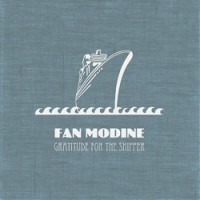
Fan Modine
Gratitude for the Shipper

Since the release of Slow Road to Tiny Empire, Fan Modine’s first album, in 1998, Gordon Zacharias has been known as an artist who mixes buoyant orchestral pop music with oftentimes more gloomy lyrics. This disconcerting combination has won him a cult following among fans of obscure rock bands, and of indie-pop artists in particular. With Gratitude for the Shipper, Fan Modine’s first album in six years, his music adds dimensions both lyrically and sonically, drawing inspiration from sources as diverse as French symbolist poet Stephane Mallarmé and Southern pop trailblazer Alex Chilton (“Waiting for Distant Light,” the album’s finale, is a tribute to the recently-deceased songwriter, singer and guitarist). With expanded instrumentation and higher-fi recording, Gratitude for the Shipper sounds consistently bright, melodic and hook-happy. “It’s a struggle to think in terms of albums these days, but I still strive for that,” Zacharias says. “I wanted to make a tight, solid album that holds together like John Cale’s Paris 1919 or Procol Harum’s A Salty Dog do for me, although, I feel like we ended up with something quite different.” Indeed. Fans of brainy power pop should crank this up with abandon. Produced by the one and only Chris Stamey.

Melissa Ferrick
Still Right Here

Melissa Ferrick has a great deal to show for two decades in the music industry. There is the expansive body of work, mapped out over the sixteen albums that comprise her career to date, nearly all of which she distributed herself. There are the stories of the crisscrossed world and the things she has both gained and lost in her wake. There is the fervent fan-base that has grown with Ferrick, which has waited patiently for her latest opus for the preceding three years. Above all there is the sound, a voice burnished by breakdowns and breakthroughs, refined over the twenty years she has been doing this. And now, there is Still Right Here, the sum of these hard-earned parts set to music, Ferrick’s gorgeous purpose unspooling over the ten tracks that comprise the album. Featuring performances by Ani DiFranco & Kaki King, the album perfectly showcases Ferrick’s finely-honed chops as a singer & guitarist, while highlighting her prowess on piano & drums. Co-produced by Ferrick with Brooklyn indie darling Alex Wong (The Paper Raincoat, Vienna Teng), it’s a rich, emotionally intense album that will appeal to fans of Tegan & Sara, Ben Harper, She & Him, Jakob Dylan & David Gray.

CIMS HANDPICKED: TYLER THE CREATOR, VIVA VOCE AND THE HORRIBLE CROWES

TYLER, THE CREATOR
Goblin

To those who don’t follow underground hip hop, Tyler, The Creator (ringleader of the rap collective known as Odd Future) seemingly appeared fully formed in a dervish of hype and nasty tweets when, in fact, this laboriously titled group of hip hop deviants had been releasing crazy-ass mixtapes on their own for a couple of years. So now we arrive at Goblin. The album’s production came almost entirely from Tyler himself, along with contributions from fellow OFWGKTA member Left Brain. Without a doubt Goblin is meant to shock, but have no doubt that it’s the work of a mad genius. If you can separate yourself from the hype then it’s easy to see what all the uproar is about.

VIVA VOCE
The Future Will Destroy You

There are a handful of things about Viva Voce that lend themselves to a just-the-facts presentation: This songwriting team —Kevin and Anita Robinson – met and married in rural Alabama over a decade ago and made their first four-track demo as Viva Voce in 1998. As for describing the music the Robinsons make—Says Anita, “Basically, with each record we’re just trying to find a way to create the music that’s been living in our heads since the last one.” Written, performed, produced and mixed entirely by the duo at their Portland home studio, The Future Will Destroy You unquestionably serves as a showcase for Anita’s post-psychedelic guitar heroics—check out “Analog Woodland Song” and “The Wondering Soul” for some of the finest quiet-loud eruptions since the Pixies’ heyday. But the disc also emphasizes the Robinsons’ sense of songcraft like never before: You might not hear a ballad this year lovelier (or spookier) than “No Ship Coming In,” in which Anita’s vocals glide over a pool of shimmering space-roots atmospherics. And the apocalyptic title track? Let’s just say nobody’s ever made the end of civilization sound like such an appealing prospect.

THE HORRIBLE CROWES
Elsie

Most of us know Brian Fallon as the frontman for the Gaslight Anthem, an act who started out in Jersey basements and slowly built their way up to headlining New York’s Radio City Music Hall. Despite the success Fallon has had with his main band he’s always loved darker acts like the Afghan Whigs and Tom Waits. The Horrible Crowes — his new side-project alongside longtime friend Ian Perkins — is his tip of the hat to the acts who have shaped another side of his musical vision. Sonically Elsie sees Fallon stretching out musically in ways that might surprise longtime fans of his writing. Elsie is also the most personal release of Fallon’s career, and while the Gaslight Anthem’s music is loaded with characters and iconography, this album sees Fallon stripping back the metaphors to put it all on the line. “There’s only one character here and it’s about me.” While drug addictions, ex-girlfriends and religion all creep their way into these songs, Elsie isn’t a linear album as much as it is a catalog of experiences that are conveyed in a way that was equally as cathartic for Fallon to create as it will inevitably be for his listeners to hear.