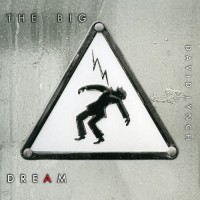
DAVID LYNCH'S 'THE BIG DREAM' AND OTHER NEW CD RECOMMENDATIONS!

THE BIG DREAMBUY THE CD HERE

The blues have been a part of David Lynch’s art for years: pieces from Angelo Badalamenti’s scores, likeFire Walk with Me’s “The Pink Room,” are dominated by time-tested chord progressions and moody atmospheres, while projects like Blue Bob demonstrated Lynch’s formidable guitar skills. All of which is to say that his second album, The Big Dream, should sound familiar to his fans, even as it pushes the blues’ boundaries. These songs are as far removed from many other artists’ bluesy dabblings as they are from Lynch’s solo debut Crazy Clown Time. That album, which spanned industrial-tinged dance music and wild spoken word pieces, was the musical equivalent of his meat sculptures, a bold showcase for the extremes of his surrealism. Fittingly, The Big Dream is blurred around the edges and wrapped in a melancholy fog; the closing track “Are You Sure” is the kind of hazily wistful song Julee Cruise would have sung at one point in Lynch’s career. However, he makes the most of his midwestern twang, using its earthiness to contrast and highlight the dream logic of songs like “Last Call,” a strange but successful blend of quirk and heartache. Lynch also imbues his cover of Bob Dylan’s “The Ballad of Hollis Brown” with creeping decay and despair that pays tribute to both artists’ work (and it’s interesting to note that there’s a similarly pinched quality to both of their voices). While he spends most of The Big Dream in this somber territory, he also remembers that the blues can be fun with “Say It”‘s roadhouse feel and the sexy, rollicking “Star Dream Girl.” The album often works best when Lynch uses elements of the genre as a jumping-off point for his experiments, as on “The Wishin’ Well”‘s shimmery electro mirage or “The Line It Curves,” which features some of his most sophisticated songwriting yet. Even if his take on the blues is far from straightforward, this might be the most accessible set of songs associated with Lynch to date. In its own hypnotic way, The Big Dream honors the blues’ lust for life and its lonely heart.-AllMusic

CLICK HERE FOR OTHER NEW RX CD RECOMMENDATIONS!

THRIFTSTORE MASTERPIECE'S 'TROUBLE IS A LONESOME TOWN' AND OTHER NEW RX CD RECOMMENDATIONS

thriftstore masterpiece BUY THE CD HERE

Thriftstore Masterpiece is a revolving music collective devoted to paying homage to the underdog records of years past. The debut album revisits Lee Hazlewood’s 1963 lost classic Trouble Is A Lonesome Town and features Pete Yorn, Frank Black, Isaac Brock, Courtney Taylor-Taylor (The Dandy Warhols), Eddie Argos (Art Brut), the late Larry Norman and more. 

In 1963, Lee Hazlewood released his debut album Trouble is a Lonesome Town to little fanfare. It was a collection of solo acoustic songs stitched together with a narrative that described life in a fictional small town inhabited by outlaws, thieves, and down-and-out laborers. The album was hokey, but hip. Corny, but cool. It evoked a bygone era of pastoral American towns and their sometimes seedy underbellies, somewhat like a darker version of the Andy Griffith Show or a more sinister Prairie Home Companion. More importantly, it was a fully realized concept album that predated the trend that is so common in today’ s music world. Hazlewood had originally intended the songs as demos for his publisher, in hopes that other artists might someday record them. A half century later, the music collective known as Thriftstore Masterpiece has done exactly that.

Producer I band leader Charles Normal explains “I first came across the record around the turn of the millennium while living in Oslo, Norway. I found it in a secondhand junk shop and it struck a nostalgic note somewhere within me. It made me homesick for the panoply of Americana I had experienced while slumming it in the Southwestern border towns and California desert whistle stops I drifted through when I first started playing music on the road. The record didn’t leave my turntable for months. Years later, I started to envision the record as a more orchestrated statement and began recording the basic tracks in my studio. My brother, singer Larry Norman, lent his voice to a couple of the tracks, but when he passed away from a heart attack in 2008 I fell into a deep funk and put the project on the back burner. I couldn’t bring myself to harmonize with his vocals … it was just too emotional to deal with. It wasn’t until much later, prompted in part by Isaac Brock, that I dusted off the tapes and hard drives and began to finish it. I went through my address book and started calling friends who happened to be in possession of great voices to see if they were interested in joining in.”-musicdirect

CLICK HERE FOR OTHER NEW RX CD RECOMMENDATIONS!

ZOMBY'S 'WITH LOVE' AND OTHER NEW CD RECOMMENDATIONS!

zombyBUY THE CD HERE

Zomby is far from finished with the eerie, introverted soundscapes that defined his acclaimed second album, Dedication. His new record, a sprawling, utterly absorbing double album, takes a slow-motion look at a range of core electronic genres and spreads their bass and beats over unrecognisably low tempos, creating a signature sound of pulsing, melodic, urban unease. It’s the feeling of walking round deserted streets at night; savouring your solitude and the beauty of your moonlit surroundings, but being constantly aware of the threats lurking just out of sight.

Broadly, With Love’s two discs divide into Zomby’s moody take on industrial, jungle, and techno on Volume I, with instrumental hip-hop and sparse, hauntingly beautiful post-dubstep cuts dominating Volume II. Initially, the atmosphere slowly builds through disorientating Crystal Castles-style glitch, spacey dub beats and the tension-ratcheting, climbing-rollercoaster of ‘Horrid’ – and so, Zomby’s (distinctly dark) stage is set.

The cherry on the already-very-impressive cake though are the stunning, post-dubstep instrumentals strung throughout With Love’s second side. Combining the layered complexity of Pantha du Prince with the melancholic beauty of James Blake’s first album, these delicate miniatures put With Love amongst the best releases of the year. From the almost Oriental ‘Reflection in Black’, to the evocative sunny pianos tinged by looming-clouds bass of ‘Sunshine in November’, these brilliant interludes show just how effective Zomby’s dance retrospective collages can be.

At a time when many electronic albums sound more like mixed sets than collections of songs, this expansive double album is all the more impressive, with its 33 abruptly separated songs holding the listener captive within Zomby’s edgy world for well over an hour. Take the advice of many a teen goth’s t-shirt and join the dark side; it’s unnervingly beautiful.-Drowned in Sound

CLICK HERE FOR OTHER NEW RX CD RECOMMENDATIONS!

CIMS RECOMMENDS: KURT VILE

BUY CD HERE
BUY VINYL HERE
BUY MP3 ALBUM HERE

“On tour, Lord of the Flies. Aw, hey, who cares? What’s a guuuii-taaaaar?” So begins the sharply titled “On Tour”, a spacious, diary-like explosion nestled just a few minutes into Smoke Ring for My Halo, Kurt Vile’s fourth and finest full-length to date. Strings buzz, strummed patterns double back on themselves and from up above it all, the Philadelphia-native showers everything with cosmic, harp-like harmonics. It’s a song that’s both monastic and vast all at once, the kind of curiously rich work that seems like it was crafted by forty longhairs instead of just one. But Vile has gone great lengths in answering his own question in recent years, finding a way to distill thousands of hours spent with classic American guitar music into one very singular and sublime vision. Whether he’s channeling the energies of John Fahey or Tom Petty or even Bob Seger, Smoke Ring makes clear that the end result is his alone.

But to listen to Kurt Vile is to hear him in conversation with himself: That can be said of his ultra-wry lyrical observations just as much as the elliptical, brick-by-brick architecture of his songwriting. In the past, though, Vile’s words have been written off as mumbled, unintelligible, and listless — a criticism made all the more reasonable given the crude recording techniques he employed. But 2009’s Childish Prodigy, his Matador debut, found Vile wiping off some of the grimy, decidedly “lo-fi” film that had fenced off much of his work up until that point. (Additionally, he brought his sometime touring band, the Violators, into the studio to help fill out those songs that required more brawn. They also appear here.) It was a jump to the relative big leagues that, despite its cleaner approach, offered more in the way of promise than focus. That’s not at all the case here. As hinted at by last year’s Square Shells EP, a “stepping stone” to where we are now, the sonics and vocals have been spit-polished to shimmer — every sonorous detail can now be heard in full, and Vile’s voice has taken on a new, mountainous presence in the center of each song. The conversation’s grown far more engaging.

What we learn is that Kurt Vile has a lot to say. He can be quick, as on the strong-jawed, electric groove of “Puppet to the Man”, when he opens, “I bet by now you probably think I’m a puppet to the man. Well I’ll tell you right now, you best believe that I am.” And he can yank your heart out, as he does a number of times here, perhaps most memorably amid the celestial fingerpicking of “Baby’s Arms”, when he tries convincing himself that, he’ll “never ever, ever be alone.” But he’s actually always alone here. Vile’s lonesome brand of melancholia is still communicated both plainly and unassumingly enough to be missed, but it’s that sense that he seems to be talking only to himself that lends these songs such magnetic pull. Between the two seismic chords of “Ghost Town” this album’s bulldozing climax, Vile wonders aloud, “think I’ll never leave my couch again, because when I’m out, I’m away in my mind. Christ was born, I was there. You know me, I’m around. I got friends, hey wait, where was I, well, I am trying.” Although he stretches those last two or three notes, it doesn’t feel like he’s singing. We’re eavesdropping on the most private of dialogs.

Sonically and compositionally, Vile allows us the space to do that. He’s still cycling between strummers and fingerpicked mazework, but the battery of pedal effects is mostly gone. Rather than stitch loop to loop to loop, Vile’s given every marvelous, carefully placed layer all kinds of room to aerate. In the past, “Peeping Tomboy” may have sunk halfway through its bridge, while single “In My Time” probably would have lost its way mid-jam. But here, Vile has acknowledged limits in length for the sake of depth. It makes for a full-blown journey. Though there isn’t an earworm like “Freeway” — that endlessly replayable, interstate love song from Vile’s 2008 Constant Hitmaker LP — Smoke Rings isn’t that kind of listen. This feels like a family of songs, one whose complexion and course changes as a whole with every spin. In the closing moments of “Ghost Town”, Vile leaves us with, “Raindrops might fall on my head sometimes, but I don’t pay ’em any mind. Then again, I guess it ain’t always that way.” He knows exactly what he’s trying to say. Pitchfork

RECORD EXCHANGE STAFF PICK: IAN ON BON IVER’S NEW SELF-TITLED ALBUM

Bon Iver’s self-titled second album is shaping up to be one of my definite favorite records of the year. While it’s been a pretty good year for music (I liked the new Radiohead and Panda Bear albums a lot), nothing has quite gripped me like last year’s Avey Tare and Sparklehorse records did. Thankfully, thanks to Bon Iver’s Justin Vernon, that’s about to change.

Bon Iver’s first album For Emma, Forever Ago relied on Vernon’s extraordinary voice to fill out the empty spaces left by its skeletal instrumentation. On Bon Iver’s self- titled sophomore full-length, Vernon and Co. have crafted a musical backdrop as lush and multilayered as Vernon’s voice. Soft-rock arrangements, synthesizers, a collection of found sounds and field recordings: Few of the things going on in this album seem like a good fit, but as the vocoder and auto-tune-led incantation Woods and his contributions to Kanye West’s most recent album have proved, seemingly horrible ideas can be made brilliant in Vernon’s execution of them.

In many ways, Bon Iver manages to stuff nearly all of Vernon’s post-Emma projects and ideas (Blood Bank’s more whole-band approach, Volcano Choir’s experimental tendencies, Gayngs’ diverse instrumentation) into one cohesive whole. Not to be outdone by this new musical background, Justin Vernon also brings some of his best singing and songwriting thus far. Not content with just sticking with his trademark falsetto, Vernon, much more than before, sings at a lower register, and as a result, manages to sound both human and otherworldly. Like with Emma, this record’s songs build off each other in surprising and cohesive ways. Once it’s been started, it’s hard to turn off.

Over a year ago, when discussing the then-just beginning recording process of this record, Vernon spoke on how he didn’t just want to be known as an acoustic folk singer-songwriter, how he wanted to spread out. The payoff of that is already present: Justin Vernon created one of the previous decade’s greatest albums by providing one man’s distinct take on a hundreds-of-years-old genre. With Bon Iver, that same man, having formed a twelve-piece band, gives his take on a much more recent era: a time where seemingly incompatible ideas and instrumentation gel together thanks to both the power of the studio and the imagination. It’s a very new musical universe to explore, and it’s one Justin Vernon now finds himself shaping.