THE VINYL WORD: GOGOL BORDELLO'S ALBUM 'PURA VIDA CONSPIRACY'

GOGOL BORDELLOBUY THE VINYL HERE

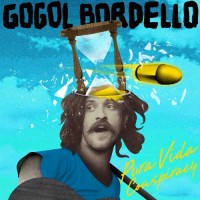
Internationally renowned gypsy punk rock group Gogol Bordello return with their sixth full-length album Pura Vida Conspiracy. Produced by Andrew Scheps, the new album was recorded in El Paso, Texas at Sonic Ranch Studios and is a powerful collection of 12 surging new songs.

The album’s title is derived from a Spanish slang phrase for “pure life,” which is a theme that resonates throughout the new material.  The disc’s opener, “We Rise Again,” introduces the album’s limitless, all-embracing themes instantly, centered on a chorus of “Borders are scars on face of the planet.” The new songs are infused with ideas rooted in Eastern philosophy but also search for a means of joining fragmented parts and persons, and of creating a worldwide consciousness.

“For me music is a way to explore human potential,” frontman Eugene Hutz says. “And that’s my main interest in life – human potential. Everyone knows there’s something inside of us that we’re not using. How do we get it? How do we reach it?  Every single person knows that there’s something and nobody knows what it is. So at one point I said to myself, I’m gonna get down and get it.”

CLICK HERE FOR MORE NEW VINYL RELEASES!

DAVID LYNCH'S 'THE BIG DREAM' AND OTHER NEW CD RECOMMENDATIONS!

THE BIG DREAMBUY THE CD HERE

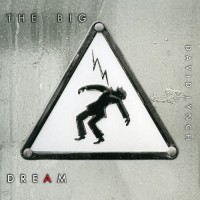
The blues have been a part of David Lynch’s art for years: pieces from Angelo Badalamenti’s scores, likeFire Walk with Me’s “The Pink Room,” are dominated by time-tested chord progressions and moody atmospheres, while projects like Blue Bob demonstrated Lynch’s formidable guitar skills. All of which is to say that his second album, The Big Dream, should sound familiar to his fans, even as it pushes the blues’ boundaries. These songs are as far removed from many other artists’ bluesy dabblings as they are from Lynch’s solo debut Crazy Clown Time. That album, which spanned industrial-tinged dance music and wild spoken word pieces, was the musical equivalent of his meat sculptures, a bold showcase for the extremes of his surrealism. Fittingly, The Big Dream is blurred around the edges and wrapped in a melancholy fog; the closing track “Are You Sure” is the kind of hazily wistful song Julee Cruise would have sung at one point in Lynch’s career. However, he makes the most of his midwestern twang, using its earthiness to contrast and highlight the dream logic of songs like “Last Call,” a strange but successful blend of quirk and heartache. Lynch also imbues his cover of Bob Dylan’s “The Ballad of Hollis Brown” with creeping decay and despair that pays tribute to both artists’ work (and it’s interesting to note that there’s a similarly pinched quality to both of their voices). While he spends most of The Big Dream in this somber territory, he also remembers that the blues can be fun with “Say It”‘s roadhouse feel and the sexy, rollicking “Star Dream Girl.” The album often works best when Lynch uses elements of the genre as a jumping-off point for his experiments, as on “The Wishin’ Well”‘s shimmery electro mirage or “The Line It Curves,” which features some of his most sophisticated songwriting yet. Even if his take on the blues is far from straightforward, this might be the most accessible set of songs associated with Lynch to date. In its own hypnotic way, The Big Dream honors the blues’ lust for life and its lonely heart.-AllMusic

CLICK HERE FOR OTHER NEW RX CD RECOMMENDATIONS!

NEW DVD/BLU-RAY: THE HILARIOUS THIRD SEASON OF PORTLANDIA!

portlandiaBUY THE DVD HERE
BUY THE BLU-RAY HERE

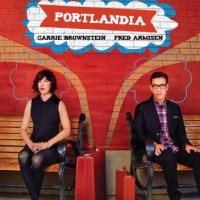
Fred Armisen and Carrie Brownstein’s Portlandia has amounted to a kind of frenzied pedicab tour of the city of Portland, Oregon by way of Apple Maps. Though residents of the city continue to debate whether or not the series is good for local tourism, cameos by mayor Sam Adams would seem to suggest a loving symbiosis between the city and its fictional depiction. Yet in the show’s third season, Armisen and Brownstein seek to expand both its audience and its relevance, making several excursions outside the city limits.

The series continues its somewhat more combative tone with respect to today’s youth in another music-related sequence set outside Portland’s city limits. Playing old-school punk “Gen Xers,” Armisen and Brownstein recruit Kurt Loder and other symbols of MTV’s heyday to “take back” the network from tweens. They head to Times Square and raid MTV’s headquarters, successfully taking over the airwaves from the head honcho, a world-weary tween girl, who coldly insists “music is dead.” The girl then goes on to point out the irony of nostalgia victims trying to “take back the youth-oriented channel from the youth.” Given that even the older generation refuses to tune in, she turns out to be right. By this point, the depiction of failed revolutions has already become one of the season’s winning comic routines.

A jab at raw milk curdles on arrival, and the scene in which a girl spends her entire meditation class fantasizing about the man across from her feels like a joke we’ve already seen a dozen times, but these are exceptions to the rule. Portlandia’s best gags instead all seem to embody a kind of post-Occupy disillusionment, and season three’s less provincial outlook ensures the show’s continued relevance. It’s less intensely fixated on the city from which the series derives its name, and Armisen and Brownstein’s willingness to expand the scope of its satire has ultimately led to something more sustainable, if a little less local.-Slant

CLICK HERE FOR OTHER NEW DVD/BLU-RAY RELEASES!

THE VINYL WORD: 'CELESTIAL' BY ISIS

Isis_CelestialBUY THE VINYL HERE

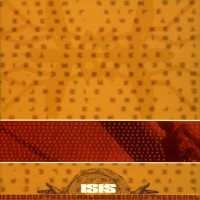
The now-classic debut full-length Celestial highlights ISIS‘ roots in metal and hardcore while displaying the experimentation with post-rock and ambience that they would become best known for. Accurately described by Decibel Magazine as “a transitional record between the band’s early work and the post-metal benchmarks such as Oceanic … the elements of the greatness are present, but rawer, more direct.” Initially surfacing in 2000 following the larvael stages of formative EPs, Celestial was ISIS’ first release with the (then newly-solidified) lineup that would last them through a decade until disbanding in 2010.

With chugging sludge, expansive doom, droning metal and a nuanced yet vital use of keys, samples and noise, Celestial at times borders on completely devastation, but gracefully shifts into passages of sheer beauty. ISIS came into their own with Celestial, mastering the flow of sonic dynamics between “loud” and “quiet”, smoothly bringing sparse elements into an otherwise oppressively heavy sound.

This unique and varied album of nearly an hour’s length was their first captured by engineer Matt Bayles, who subsequently recorded ISIS‘ following three long-players. Aaron Turner’s artwork has been fully reimagined from the original elements, and the double LPs are housed in a gatefold jacket with printed innersleeves containing flood-black interior printing. Out of print for years, Celestial is finally available again with newly remastered audio, carefully crafted specifically for vinyl by longtime cohort James Plotkin. 

CLICK HERE FOR MORE NEW VINYL RELEASES!

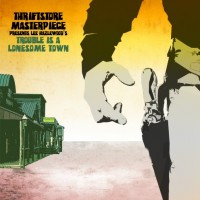
THRIFTSTORE MASTERPIECE'S 'TROUBLE IS A LONESOME TOWN' AND OTHER NEW RX CD RECOMMENDATIONS

thriftstore masterpiece BUY THE CD HERE

Thriftstore Masterpiece is a revolving music collective devoted to paying homage to the underdog records of years past. The debut album revisits Lee Hazlewood’s 1963 lost classic Trouble Is A Lonesome Town and features Pete Yorn, Frank Black, Isaac Brock, Courtney Taylor-Taylor (The Dandy Warhols), Eddie Argos (Art Brut), the late Larry Norman and more. 

In 1963, Lee Hazlewood released his debut album Trouble is a Lonesome Town to little fanfare. It was a collection of solo acoustic songs stitched together with a narrative that described life in a fictional small town inhabited by outlaws, thieves, and down-and-out laborers. The album was hokey, but hip. Corny, but cool. It evoked a bygone era of pastoral American towns and their sometimes seedy underbellies, somewhat like a darker version of the Andy Griffith Show or a more sinister Prairie Home Companion. More importantly, it was a fully realized concept album that predated the trend that is so common in today’ s music world. Hazlewood had originally intended the songs as demos for his publisher, in hopes that other artists might someday record them. A half century later, the music collective known as Thriftstore Masterpiece has done exactly that.

Producer I band leader Charles Normal explains “I first came across the record around the turn of the millennium while living in Oslo, Norway. I found it in a secondhand junk shop and it struck a nostalgic note somewhere within me. It made me homesick for the panoply of Americana I had experienced while slumming it in the Southwestern border towns and California desert whistle stops I drifted through when I first started playing music on the road. The record didn’t leave my turntable for months. Years later, I started to envision the record as a more orchestrated statement and began recording the basic tracks in my studio. My brother, singer Larry Norman, lent his voice to a couple of the tracks, but when he passed away from a heart attack in 2008 I fell into a deep funk and put the project on the back burner. I couldn’t bring myself to harmonize with his vocals … it was just too emotional to deal with. It wasn’t until much later, prompted in part by Isaac Brock, that I dusted off the tapes and hard drives and began to finish it. I went through my address book and started calling friends who happened to be in possession of great voices to see if they were interested in joining in.”-musicdirect

CLICK HERE FOR OTHER NEW RX CD RECOMMENDATIONS!