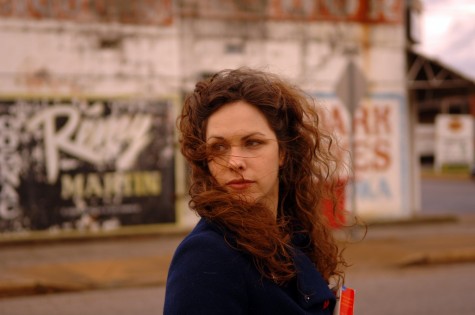
AMY LAVERE RECORD EXCHANGE IN-STORE TUESDAY, SEPT. 20 (6 P.M.) – LAVERE’S ONLY SHOW IN TOWN!

Amy LaVere will perform live at The Record Exchange (1105 W. Idaho St., Downtown Boise) at 6 p.m. Tuesday, Sept. 20. As always, this Record Exchange in-store performance is free and all ages. THIS IS AMY’S ONLY SHOW IN TOWN!

ABOUT AMY LAVERE

“Amy LaVere has made the breakup album of the year.” — Spin (8.0/10.0 review)

The stranger in popular culture has often been a signifier for isolation. Amy LaVere’s (amylavere.com) life since the release of her last album has seen the breakup with a long-term love relationship and musical collaborator, as well as the death of a musical mentor, which resulted in a longer gestation period for this, her third album, Stranger Me (Archer). Under the circumstances, one could imagine the allure of emotional distance.

Or does she mean stranger, as in more idiosyncratic? By a purely musical definition, Stranger Me would certainly qualify. Always texturally rich and often employing dissonance and off-kilter instrumentation, it is her most exploratory work to date. Producer Craig Silvey, fresh from engineering Arcade Fire’s Grammy-winning The Suburbs album, proved a perfect choice in helping LaVere materialize the music that was in her head. The resulting soundscape, alternately haunting and exuberantly defiant, creates a perfect backdrop for this collection of songs about frustration and feeling emotionally disconnected.

LaVere was originally planning on making this album with her second album, Anchors & Anvils, producer, the legendary Jim Dickinson. He had not been in good health for some time, and she felt that she may not have many more opportunities to record with him. “He was the one who really got me to believe in my own voice,” says LaVere. When he passed in August 2009, in addition to grieving one of her greatest mentors and champions, she was back at square one in the recording process. One of her first thoughts, after she was ready to begin thinking about producers, was Silvey. They met in London through a mutual friend at the BBC, hit it off immediately and he volunteered to run sound for her performance on Later With Jools Holland. Although he would make a point to see her when she was performing in London, he had yet to listen to her albums. When she contacted him to consider producing her, he further resisted the temptation to listen to the first two records, so he could approach the new recording with fresh ears and ideas.

LaVere experienced other upheavals last year, beginning with the departure of her guitar player, Steve Selvidge, who left to join The Hold Steady. Even more devastating, she and her boyfriend/drummer Paul Taylor decided to call it quits after six years. “There’s much love and respect between the two of us, but sometimes creative people aren’t good together when they never get a break from one another,” she explains. After starting the recording process without him, it was evident that she missed his musical contributions, so she called him, and he eagerly agreed to play drums on the album. “You can’t replace the magic that comes from all those years of playing together,” she says. The process of recording became a healing experience as they redefined their relationship. LaVere channels the heartbreak that comes with the end of a relationship in “Tricky Heart“and “Cry My Eyes Out,” an ethereal song that finds its protagonist driving late into the night hoping to find a song on the radio that will trigger a cathartic release.

Like Dickinson before him, Silvey encouraged LaVere to follow her own muse, even when (especially when) it led her to more esoteric choices, like the one to cover Captain Beefheart’s “Candle Mambo.” “When I was on tour for the last album, we went through a Beefheart phase in the van. My old guitar player said, ‘Now THAT’S a love song.’ And he’s right. I first became obsessed with the idea of just covering it live but we could never get it to make sense with the limited instrumentation of my band at that time. I wanted to present it in a way that would explore the drunken nature of infatuation and how distracting it is. This idea needed a messier bed to lie in. Recording it gave me the opportunity to realize that.”

Amy LaVere was born in Louisiana and moved around as a GM brat (“Dad moved around to open factories”), and the family eventually settled near Detroit, at least everyone but her father, who continued to travel for work. The family structure eventually gave way. She and her sister rebelled, and one of the ways Amy did so was by joining a band at age 14. Rebellion is still a potent theme for her, and she continues to defy and test love’s constraints, adding to the body count of the last album (“Killing Him”) with “Red Banks,” a sly turn on the blues/country yarn where the girl usually ends up getting it in the end. In “Damn Love Song,” she finally writes the love song that her lover has longed for, but it’s practically spit at him as she is walking out the door. “You Can’t Keep Me” is a insolent pop song that warns that she won’t be held captive in her relationship as a building cacophony of horns and Theremin joyously celebrate her imminent freedom.

LaVere brought together a group of musicians that provided the right aesthetic for the album. Her first call was to Rick Steff (Lucinda Williams, Cat Power, Lucero) whose love for all things left of center appealed to her. He brought to the recording process a fertile imagination and a repository of odd instruments, including toy pianos, organ, Buddha boxes and the Theremin. Guitar player David Cousar, whose style Silvey describes as “beautifully eccentric,” was her next call. Other musicians include Anchors & Anvils violinist Bob Furgo (Leonard Cohen), floutist/saxophone Clint Maegden (Preservation Hall Jazz Band), cellist Jonathan Kirkscey and violist Beth Luscombe (Memphis Symphony), trumpeter Nahshon Benford, saxophonist Jim Spake and bassist John Stubblefield (Lucero).

Stranger Me is the next step in the exciting evolution of Amy LaVere. — clearly more confident in her musical point of view, possessing more wisdom about what love is not and ready to embrace the ideal of the stranger, whatever its iteration.

SONIA LEIGH (ZAC BROWN OPENER) IN-STORE THURSDAY, SEPT. 15 (5 P.M.)

Sonia Leigh will perform live at The Record Exchange (1105 W. Idaho St., Downtown Boise) at 5 p.m. Thursday, Sept. 15. As always, this Record Exchange in-store performance is free and all ages. Sonia Leigh is opening for the Zac Brown Band at Taco Bell Arena later that night (7 p.m.).

Record Exchange customers will have an exclusive opportunity to purchase Sonia Leigh’s new album 1978 December at the in-store 12 DAYS BEFORE RELEASE DATE!

ABOUT SONIA LEIGH

Loretta Lynn certainly didn’t know she was seeing a future opening act when she spotted a five-year-old girl in the crowd at an Alabama concert. As the story goes, during a quiet moment the enraptured child exclaimed, “now that’s country, dad!” The crowd stirred and the coal miner’s daughter herself spotted little Sonia Leigh (sonialeigh.com), then bowed and waved, laughing, before moving on to the next song.

But nearly 30 years later, that little girl opened for Lynn, winning over audiences with her gritty vocal delivery and bold, disarmingly honest songwriting. Between her childhood concerts and her rising career today as a Southern troubadour were many hard days, battle scars and dues paid. Sonia Leigh has earned every bit of soulful, lived-in authenticity her songs and performances portray.

The songs on 1978 December, Leigh’s Southern Ground debut, range from the boozy barroom sing-along of “Bar”—a throwback redolent of the less well-behaved Nashville of yesteryear—to the soulful Muscle Shoals shuffle of “I Just Might,” the acoustic groove of “Virginia” (featuring Amy Ray of the Indigo Girls) and the keenly observed country-rockin’ “My Name Is Money.”

Categorization is futile. Is it country, blues, soul or rock? The answer is yes. Is it Southern? Add an exclamation point to the prior answer.

In this Leigh has a lot in common with one of her mentors, Zac Brown, who recently signed her to his Southern Ground Artists label. Leigh has been a part of Brown’s musical family for seven years now, having met the singer/songwriter in Atlanta musical circles. Brown’s right-hand-man John Hopkins served as producer for Leigh’s independent outing Run or Surrender.

Like everything else she’s done, 1978 December is the sound of Leigh expressing her soul. It’s not calculated, focus-grouped or target-marketed. In fact, Leigh wouldn’t have the slightest clue how to do that. “It’s hard for me to just sit down and write and try to write a hit,” she says. “That’s just not me as a writer. I write about what’s happening and what I see.”

BUY THE CD AT RX, GET A FREE TICKET TO THE SHOW AT KNITTING FACTORY!

The Record Exchange has partnered with the Knitting Factory to offer you a sexy deal on upcoming concerts: Buy the artist’s new CD at the RX and get a free ticket* to the show at the Knit!

Current concerts, with eligible CD titles, are listed below:

Amon Amarth, Sept. 3, Surtur Rising (on sale for $15.99; tickets at the door are $20)

* While Supplies Last

VIVA VOCE RECORD EXCHANGE IN-STORE SATURDAY, SEPT. 10 (6 P.M.); ALL AGES!

Viva Voce will perform live at The Record Exchange (1105 W. Idaho St., Downtown Boise) at 6 p.m. Saturday, Sept. 10. As always, this Record Exchange in-store performance is free and all ages. Viva Voce is performing at Neurolux later that night (8 p.m.) and we have tickets for sale here at the store!

ABOUT VIVA VOCE

There are a handful of things about Viva Voce (vivavoce.com) that lend themselves to a just-the-facts presentation: This songwriting team —Kevin and Anita Robinson – met and married in rural Alabama over a decade ago and made their first four-track demo as Viva Voce in 1998. Since then, they have relocated to Portland, Oregon, released a number of critically acclaimed recordings and toured extensively, including stints with the Shins and Jimmy Eat World.

As for describing the music the Robinsons make—well, that’s a difficult proposition. Indie rock? Too polite. Psychedelia? Too old-school. Black-light soul with a heavy-metal heart? Um, is that even a thing? Says Anita, “Basically, with each record we’re just trying to find a way to create the music that’s been living in our heads since the last one.”

The Robinsons’ mental storage space was filled to capacity while creating The Future Will Destroy You, Viva Voce’s fifth full-length and the band’s debut for Vanguard Records. The 10-track set comes only two years after 2009’s acclaimed Rose City, about which Spin gushed, “It’s the songwriting, hooks and escalating thrum of a capable rock band that pull listeners from each twinkling vista to the next.” Yet during that period Kevin and Anita kept remarkably busy, recording and touring behind the first album by their country-tinged side project, Blue Giant (which occasionally features members of the Decemberists and the Corin Tucker Band).

The result is the most expansive, vibrant collection of rock songs we’ve yet heard from Viva Voce. Written, performed, produced and mixed entirely by the duo at their Portland home studio, The Future Will Destroy You unquestionably serves as a showcase for Anita’s post-psychedelic guitar heroics—check out “Analog Woodland Song” and “The Wondering Soul” for some of the finest quiet-loud eruptions since the Pixies’ heyday. But the disc also emphasizes the Robinsons’ sense of songcraft like never before: You might not hear a ballad this year lovelier (or spookier) than “No Ship Coming In,” in which Anita’s vocals glide over a pool of shimmering space-roots atmospherics. And the apocalyptic title track? Let’s just say nobody’s ever made the end of civilization sound like such an appealing prospect.

Those are only a few of her star turns, too: Throughout Future, Anita’s singing plays a more prominent role than on previous Viva Voce records, where both members split vocal duties fairly equally. “We both still sing, but I think I’ve really come into the lead-singer role on this record,” Anita explains. “And I love that it happened in this natural, organic way.” As regards the other instruments, the Robinson-family division of labor typically saddles Anita with guitar and Kevin with drums. “Everything else,” says Anita, “we arm-wrestle over.”

You can hear that intimate interaction deep inside this music, which both members say reflects their joy in returning to a close two-person relationship following the experience with Blue Giant and with the four-piece band that toured behind Rose City. “This is Viva Voce getting back to what it is,” Anita says, adding that the lack of outsiders made it possible for her and Kevin (the self-described “knob-twiddler in the family”) to work quickly and with purpose; indeed, the entire process took place over a mere four weeks this past winter. “Although we treated the songs with love and care, we wanted the record to have a feeling of immediacy. That forced us to get into high gear and stay there. You have to make decisions and commit to them, and scrap something if it’s not cutting it.”

“The creative wheels were really greased,” Kevin offers. “The way we write and record just totally clicked on this record. I feel like it realizes the potential all of our previous albums hinted at.” Kevin calls Future a series of “miniature explosions,” which feels right. “It was definitely a labor of love.”

EILEN JEWELL RECORD EXCHANGE IN-STORE SATURDAY, AUG. 27 (2 P.M.)

Eilen Jewell will perform live at The Record Exchange (1105 W. Idaho St., Downtown Boise) at 2 p.m. Saturday, August 27. As always, this Record Exchange in-store performance is free and all ages. Jewell is performing at the Egyptian Theatre later that night (8 p.m.) and we have tickets for sale here at the store!

READ A REVIEW AND BUY HER NEW ALBUM QUEEN OF THE MINOR KEY HERE.

ABOUT EILEN JEWELL

It is the battered cassette jammed in the tape deck of the getaway car, the music Ida Lupino cues up on the roadhouse jukebox as she counts the till after close. This is Queen of the Minor Key by Eilen Jewell (eilenjewell.com), a smart cookie with a heart of burnished gold and enough stories to keep even the rowdiest crowd hanging on her every word. Though its long shadows and dark corners make her kingdom feel intimate, her sovereign domain stretches as far as the imagination. Its denizens seek refuge in padded rooms, abandoned automobiles … and strong spirits. They defend their territory by any means necessary: weird voodoo, sawed-off shotguns, broken bottles.

But beware, savvy observer. There is more to Eilen Jewell than meets the ear. Do not confuse the singer and her songs. The drama and darkness that give Queen of the Minor Key its gritty texture are in short supply in the Boston-based songwriter’s personal life. And in a curious twist, these fourteen originals actually took shape in a sunny, idyllic location that contrasts strikingly with the album’s moody, film noir atmosphere.

In August 2010, Jewell headed to a tiny cabin in the mountains of Idaho. Although her clan hails from the Gem State, this was no comfy retreat at the family fold. Her temporary abode had no running water or electricity, and sat at the end of a winding dirt road. Wild elk would graze in the surrounding meadows while she worked. When it was time to unwind, she availed herself of a nearby hot springs. A dilapidated truck she found on the property even made its way into the album artwork.

She had no set game plan, and her sole objective for the new material was refreshingly modest (or incredibly daunting, depending on your point of view). “My goal as a songwriter is to always improve,” she demurs. “Every time I make a record, I want it to be even more real, more heartfelt, than the one before it. I want the slow songs to be slower and the fast songs to be faster.” Drawing on a connoisseur’s love of roots music and a writer’s eye for detail, Jewell fashions her musical vignettes with impressive economy. Each turn of phrase and chord change is executed with an élan that belies the measured precision behind it.

Jewell is wary of repeating previous success by following formulae. “But I also don’t want to change things just for the sake of changing them,” she adds. Never underestimate the public’s ability to recognize calculation masquerading as inspiration. “You always want to ride the creative process to new territory, without being overwhelmingly novel.”

Towards that end, she experimented with dark humor in the new material. The title tune takes inspiration from a poke someone made about her harmonic preferences. “I decided to run with that and adopt the moniker, even if it started off as a nickname that wasn’t necessarily intended to be flattering.” “Bang Bang Bang” eschews the cliché of Cupid as a rosy-cheeked cherub (“he’s more reckless and violent than that”), and replaces his petite bow-and-arrow with a gun show six-gauge, plus a laughing disregard for such trivial concerns as aim.

Queen of the Minor Key is also the first Eilen Jewell album to feature a significant number of guest players, even as she continues to work in close consort with her longtime trio of drummer Jason Beek, guitarist Jerry Miller, and upright bassist Johnny Sciascia. Zoe Muth and Big Sandy (of Big Sandy & His Fly-Rite Boys) both contribute vocals. “I was writing the songs with them in mind—if I could work up the courage to ask them—so I was really honored that they agreed to sing with me.” Further augmenting the sound are Rich Dubois on fiddle, David Sholl on tenor and baritone saxophones, and Tom West on organ. The arrangements, Jewell insists, occurred organically as the music was fleshed out in the studio; the songs tell her where they want to go. “We don’t really think it out that much.”

Since her official 2006 debut, Boundary County, Jewell has surveyed a wide range of traditional musical styles, from the folk and jug band leanings of her early recordings, through an album-length homage to Loretta Lynn and the country gospel of her work with The Sacred Shakers, right up to 2009’s Sea of Tears, which bristled with the electricity of ’60s UK garage rock and Chicago blues. Queen of the Minor Key draws on everything from classic country (the fiddle-driven “Reckless”) to early R&B (the shuffling “Hooked”), with an emphasis on sounds from the seamier side of the tracks. With dirty sax riffs and low-slung guitars, the instrumentals that bookend the album—”Radio City” and “Kalimotxo”—evoke the bump-and-grind exotica of vintage Southern California suburban saloons. Yet on the flipside, Jewell imbues slow, jazzy numbers like “I Remember You” and “Only One” with torch and tenacity that linger long past last call.

Eilen Jewell is the Queen of the Minor Key. Sad songs are her wealth and finery. Lend her your ears, and you will quickly hear why her humble subjects admire and adore her more with each passing year.